
Prong settings do two things at once: they grip a gemstone firmly in place and control exactly how much light reaches it. That dual role makes the prong the single most consequential structural decision in any ring design. The core trade-offs come down to two variables:
- Fewer or slimmer prongs expose more of the stone’s surface, letting in more light and making the gem look larger, but they offer less protection against impact and a higher risk of stone loss if one prong fails.
- More or heavier prongs add security and redundancy, especially for active wearers, but they cover more of the stone and can slightly reduce the brilliance you see from above.
The choices that follow from those trade-offs: prong count (3, 4, or 6), prong shape (rounded, claw, V-tip, flat/tab), prong height (cathedral vs. low-profile), and metal type. Each one shifts the balance between security and sparkle.
Pro Tip: If you’re shopping for an engagement ring you’ll wear daily, start with lifestyle before aesthetics. A six-prong, low-profile setting in platinum will outlast a four-prong cathedral mount in white gold by years of worry-free wear.
Key Takeaways
Prong settings secure a gemstone and shape its optical performance simultaneously, making prong count, shape, metal, and finishing quality the four decisions that determine how a ring looks and lasts.
| Point | Details |
|---|---|
| Prong count and security | Six prongs offer the most redundancy; losing one prong in a four-prong setting puts the stone at significantly higher risk. |
| Prong shape and stone cut | Match prong type to cut: V-tips for marquise and pear, rounded for oval and round, flat/tab for emerald and Asscher. |
| Metal and maintenance | Platinum prongs wear slowest; white gold needs rhodium plating every one to two years; inspect prongs every 12–18 months. |
| Finishing quality first | Craftsmanship at the bench matters more than prong count; poorly finished prongs snag and fail faster regardless of style. |
| Merijaan for moissanite | Merijaan’s prong-set lab-grown moissanite rings are designed with matched prong proportions and carry a lifetime warranty. |
Table of Contents
- What is a prong setting, and how does it work?
- How do prongs actually secure a gemstone?
- How do prong choices change the way a ring looks?
- Which prong type suits your stone shape?
- Does prong height affect how often you’ll snag or repair?
- How does your prong metal affect durability and color?
- How do you maintain and repair prong settings?
- How do prong choices differ for rings, earrings, and pendants?
- What do jewelry designers actually say about prongs?
- How did prong settings become the standard for engagement rings?
- How do prong settings affect cleaning and care?
- What the conventional advice on prongs gets wrong
- Merijaan’s prong-set moissanite rings
- Sources
What is a prong setting, and how does it work?
A prong setting uses small metal projections, called prongs or tines, that are welded or cast onto a metal base called the head. The head sits atop the ring shank, and the prongs bend over the stone’s girdle (the widest edge of the gem) to hold it in place. Because the stone rests on a seat cut into each prong rather than being surrounded by a wall of metal, most of its surface stays open to air and light.
The key anatomy terms you’ll encounter at a jeweler’s bench:
- Head: the metal basket or cup that the prongs extend from; it determines how high the stone sits above the finger.
- Prong/tine: each individual metal arm that contacts and grips the stone.
- Seat: the notch filed into the inner face of each prong where the girdle rests.
- Girdle contact point: where the prong actually touches the stone; the quality of this contact determines grip and vulnerability to chipping.
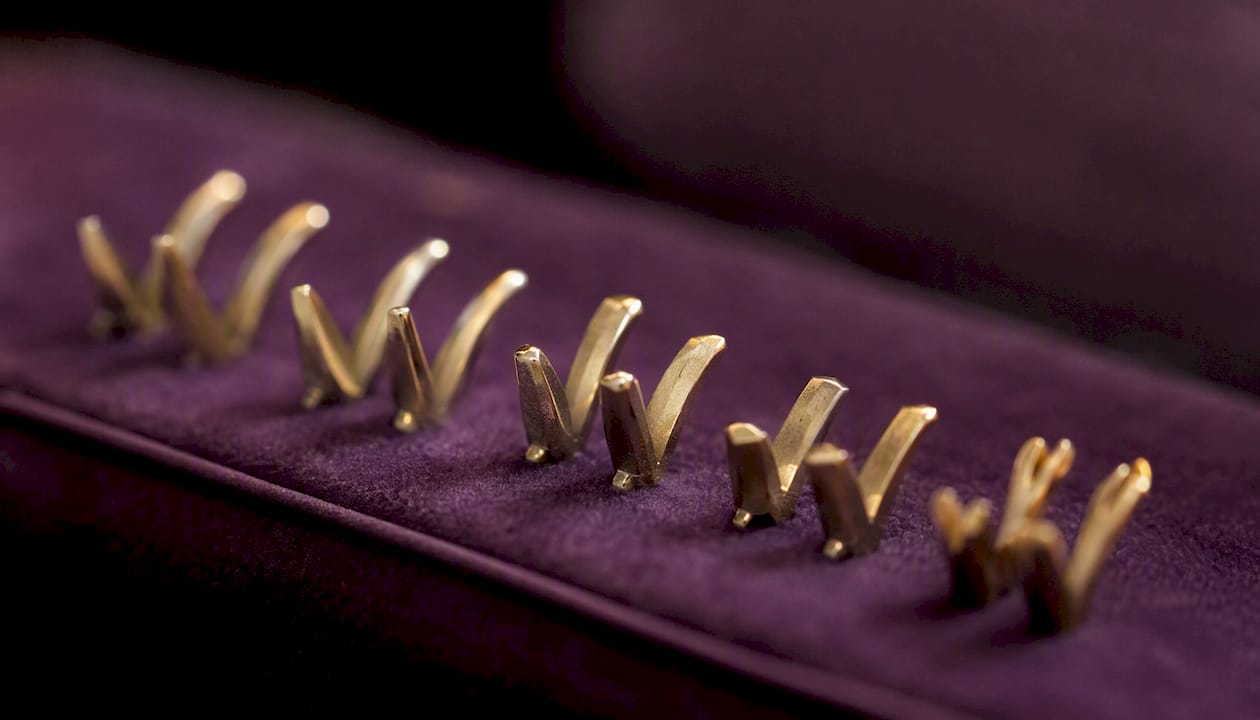
- V-tip: a prong shaped into a V to wrap around a pointed corner, common on marquise and pear cuts.
- Tab/flat prong: a wider, flatter prong that lies closer to the stone’s surface.
- Claw prong: a tapered, pointed prong that curves inward like a talon.
- Bead prong: a small rounded bead of metal raised from the setting surface, used in pavé and cluster work.
When you’re inspecting a ring in person or reviewing photos, look at three angles: straight down from above (to see how much stone is exposed), from the profile (to judge height and prong thickness), and a close-up of each prong tip (to check for wear, lifting, or rough edges). Prong-set rings also allow easier cleaning and resizing than bezel or channel mounts because the stone is accessible from multiple angles without removing it.
How do prongs actually secure a gemstone?
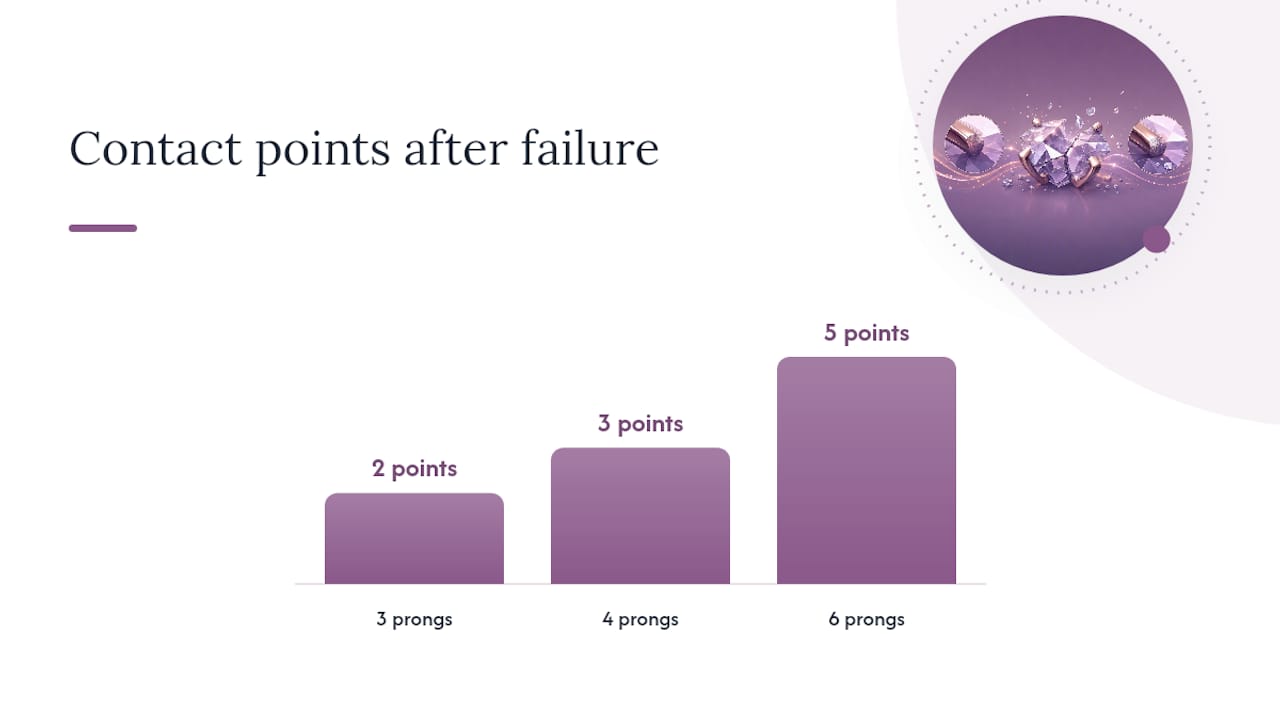
Prongs hold a stone by clamping its girdle between the seat notch and the bent-over tip. The force is distributed across all contact points simultaneously, so the more prongs, the more distributed the load. That’s the structural logic behind prong count recommendations.
Security and optical trade-offs by prong count
| Prong count | Security | Optical impact | Repair implication |
|---|---|---|---|
| 3 prongs | Lowest; one failed prong leaves only two contact points | Maximum stone exposure; very open look | Least common; re-tipping is straightforward but failure is riskier |
| 4 prongs | Moderate; losing one prong significantly increases stone-loss risk | High exposure; accentuates square/cushion shapes | Most common; retipping widely available |
| 6 prongs | Highest; one failed prong still leaves five contact points | Slightly more metal visible; rounds the stone’s silhouette | More prongs to inspect; retipping cost is marginally higher |
The failure modes to watch for are gradual wear at the prong tip (the metal thins until it no longer grips), a bent or lifted prong (often caused by catching on fabric or a hard surface), and a rough or snagging tip that signals the prong has shifted. Snagging is the early warning sign you should never ignore. If a prong catches on a sweater, stop wearing the ring and take it to a jeweler before the stone loosens.
Pro Tip: Choose six prongs for any stone over 1.5 carats or for any wearer with an active lifestyle. For stones under 1 carat where maximizing the perceived size matters most, four prongs give you the best balance of security and light exposure.
How do prong choices change the way a ring looks?
The aesthetic role of prong settings in jewelry is as deliberate as the structural one. Slender, tapered prongs expose more of the stone’s crown, which increases the visible surface area and makes a gem look larger than it actually is. Thick or flat prongs cover more of the girdle and can visually shrink a stone, even when the carat weight is identical.
Prong shape changes the silhouette in ways that are immediately visible:
- Rounded prongs create a soft, classic look that suits round brilliant cuts and oval stones; they read as timeless and understated.
- Claw/talon prongs add a sharper, more architectural edge that suits modern solitaires and princess cuts; they draw the eye upward toward the stone.
- V-tip prongs wrap the pointed corners of marquise, pear, and heart shapes, protecting the tip while giving the ring a refined, intentional finish.
- Flat/tab prongs sit lower against the stone and create a cleaner, more geometric profile that suits emerald and Asscher cuts.
Prong height compounds the effect. A cathedral setting lifts the stone high above the finger, creating a dramatic silhouette and maximizing light entry from the sides. A low-profile setting keeps the stone closer to the band, which reads as modern and understated. For lab-grown moissanite, which already has exceptional brilliance, a lower profile can actually be the smarter choice: the stone doesn’t need height to sparkle, and a lower mount is far more practical for daily wear.
Which prong type suits your stone shape?
Matching prong shape to stone cut is one of the most practical decisions in ring design. The wrong prong type leaves corners exposed to chipping or makes a beautifully cut stone look awkward in its mount.
| Prong type | Best for stone shapes | Visual effect | Security level | Snag risk |
|---|---|---|---|---|
| Rounded | Round brilliant, oval, cushion | Soft, classic, timeless | Moderate | Low (smooth tip) |
| Claw/talon | Princess, radiant, round | Sharp, modern, architectural | Moderate-high | Low-moderate |
| V-tip | Marquise, pear, heart, trillion | Refined, protective at corners | High at tips | Low (enclosed tip) |
| Flat/tab | Emerald, Asscher, baguette | Geometric, clean, low-profile | Moderate | Very low |
| Double/double-claw | Large rounds, ovals, high-value stones | Bold, secure, vintage-inspired | High | Low-moderate |
| Petite | Small rounds, accent stones | Minimal, delicate, open | Lower | Very low (small contact) |
V-shaped prongs are specifically recommended for marquise and pear cuts because the pointed tip of those cuts is the most vulnerable point on any faceted stone. A standard rounded prong sitting over a marquise tip leaves the corner exposed; a V-tip wraps it completely.
Pro Tip: Ask your jeweler to show you the prong tips under magnification before you commit to a setting. A well-finished prong tip is smooth, symmetrical, and flush against the stone. A rough or asymmetrical tip is a snagging and wear problem waiting to happen.
Custom hybrid solutions are worth asking about. A V-tip at the pointed ends of a pear combined with shared pavé prongs along the shoulders, for example, gives you corner protection and a more open look along the stone’s body.
Does prong height affect how often you’ll snag or repair?
Prong height, sometimes called the profile, determines how far the stone sits above the finger and how exposed the prong tips are to everyday contact. The higher the profile, the more the prong tips extend into the space where fabric, hair, and surfaces can catch them.
Lifestyle-based guidance:
- Active wearers (gym, outdoor work, hands-on professions): low-profile or bezel-capped prongs, four to six count, flat or rounded tips. A low-profile setting reduces the chance of a prong catching on equipment or gloves.
- Office or light daily wear: standard four-prong solitaire or six-prong cathedral; inspect every 12 months.
- Occasional/formal wear: cathedral or raised settings are fine; the stone gets maximum light exposure and the wear risk is low.
The snagging complaint that follows prong settings around is mostly a finishing problem, not a design flaw. High-quality prong finishing means polished, smooth tips that glide past fabric rather than catching it. If your prong-set ring snags constantly, the tips likely need polishing or the prongs have lifted slightly.
Height also affects cleaning. A raised stone is easier to reach with a soft brush from below, which matters for moissanite and diamond rings where buildup under the stone dulls the brilliance. Low-profile settings need more deliberate cleaning from the sides.
How does your prong metal affect durability and color?
Metal choice is where long-term maintenance costs are actually decided. The durability ranking runs: platinum at the top, followed by 14K or 18K white gold, then yellow and rose gold.
- Platinum is the densest and most wear-resistant prong metal. It doesn’t lose metal when it scratches; instead, it displaces, which means the prong retains its mass longer. Platinum prongs wear more slowly than gold and rarely need retipping as frequently. The trade-off is cost.
- White gold is harder than platinum in its alloyed state but loses metal with wear over time. It also requires rhodium plating to maintain its bright white color, typically every one to two years depending on wear. When the plating wears through, the slightly warmer tone of the gold alloy shows at the prong tips, which can affect how a colorless stone looks.
- Yellow and rose gold are softer alloys and wear faster at the prong tips. They’re beautiful against warm-toned stones and certain moissanite cuts, but they need retipping more frequently than platinum.
For lab-grown moissanite, which has a near-colorless to colorless appearance and exceptional refractive index, white gold or platinum prongs are the strongest optical choice. The white metal at the prong tip doesn’t introduce any warm color cast into the stone’s face-up appearance. If you’re drawn to yellow or rose gold for the band, consider white gold or platinum prong tips specifically, a technique called a “two-tone” or “mixed-metal” head. You can read more about why moissanite pairs well with specific metals in Merijaan’s guide.
Pro Tip: If budget is a constraint, 14K white gold with rhodium-plated prongs is a practical middle ground. Just schedule your rhodium replating every 18 months and ask your jeweler to check the prong tips at the same appointment.
How do you maintain and repair prong settings?
Prong maintenance is the one area where proactive attention pays off most clearly. A retip costs a fraction of what you’ll spend replacing a lost stone.
Monthly DIY inspection checklist
- Hold the ring under good light and look at each prong tip from above and from the side.
- Gently press each prong tip with a fingernail. It should feel solid and immovable.
- Try to wiggle the stone very gently between two fingers. Any movement means a prong has loosened.
- Run the ring across a piece of fine fabric (like a silk scarf). Snagging means a prong tip has lifted or roughened.
When to see a jeweler
Professional prong inspections every 12–18 months are the standard recommendation. A jeweler will check prong thickness under magnification, test the seat contact, and catch wear before it becomes a problem.
Repair types and what they mean:
- Re-tipping: adding a small amount of metal to a worn prong tip. Quick, inexpensive, and the most common repair. Typically completed in one to three days.
- Re-seating: repositioning a stone that has shifted in its seat without rebuilding the prong. Moderate cost and complexity.
- Head rebuild: replacing the entire prong head when prongs are too worn to retip. More labor-intensive and costlier, but far less expensive than replacing a lost stone.
Proactive inspections reduce the likelihood of expensive repair. A prong that’s caught early at the re-tipping stage costs a small fraction of what a head rebuild or stone replacement runs. For caring for your ethical jewelry long-term, scheduling that annual check alongside your rhodium plating appointment is the most efficient approach.
How do prong choices differ for rings, earrings, and pendants?
The role of prong settings in jewelry shifts depending on where the piece is worn and how it moves.
Rings carry the highest wear risk because they contact surfaces constantly. Solitaire rings typically use four or six prongs on a head; three-stone rings often use four prongs per stone, with the center stone getting six if it’s significantly larger than the side stones. Height and snag risk are the primary practical concerns.
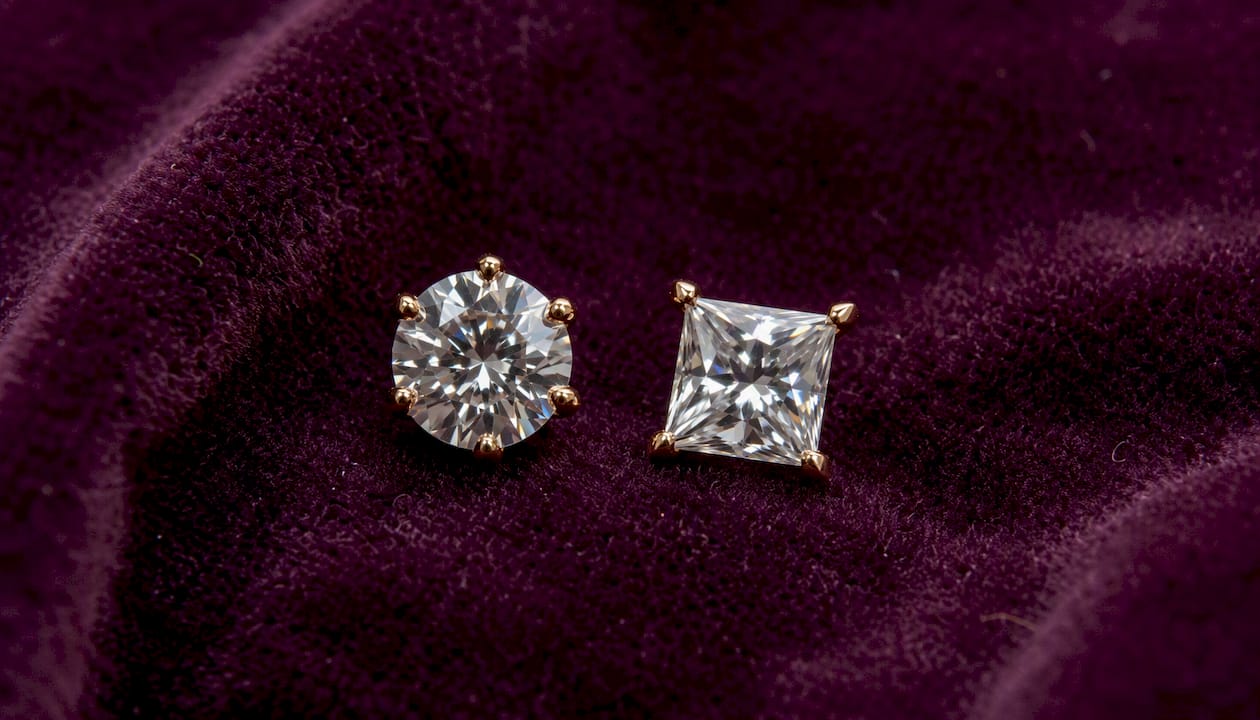
Earrings favor fewer, lower-profile prongs. Three or four prongs are standard for stud earrings because symmetry matters more than redundancy, and the stone faces outward rather than downward. Fewer prongs also mean less metal visible from the front, which keeps the stone as the focal point. Catching on hair is the main snag concern, so well-finished, smooth prong tips are especially important.
Pendants sit against the chest and swing with movement, which means the stone’s tip and corners take repeated light impacts. V-tip prongs on pointed stones and double-claw prongs on larger round stones are common choices. The bail design interacts with prong exposure: a bail that positions the stone face-forward puts the prong tips in direct contact with clothing, so lower-profile or bezel-capped prongs are often preferred for everyday pendant wear.
For earrings specifically: three prongs vs. four is mostly a symmetry question. Four prongs give a more balanced look on round stones; three prongs create a slightly more open, modern appearance. Security difference at earring scale is minimal.
What do jewelry designers actually say about prongs?
Designers don’t think of prongs as fasteners. They think of them as framing devices, the way an architect thinks about the trim around a window.
The practical design rules that follow from that framing:
- Proportion matters more than count. A thick prong on a small stone overwhelms it; a petite prong on a large stone looks fragile and is fragile. The prong’s visual weight should feel like it belongs to the stone.
- Contrast is intentional. Yellow gold prongs against a colorless stone create warmth and vintage character. White metal prongs against the same stone disappear, letting the gem read as floating.
- Visible vs. discreet prongs are a design choice. Claw prongs that extend visibly above the stone’s table draw attention to the setting itself. Flush-finished or low-profile prongs recede and let the stone dominate.
Merijaan applies these rules directly to its lab-grown moissanite designs, pairing prong proportions to stone size and selecting finishing details that let the stone’s natural fire read clearly rather than competing with the metalwork. The result is a setting that looks intentional rather than generic.
How did prong settings become the standard for engagement rings?
The prong setting’s dominance in fine jewelry is relatively recent. Before the late 19th century, most gemstones were set in closed-back mounts, where a solid metal surround held the stone from below and the sides. These settings protected the gem but blocked light almost entirely, which muted brilliance.
The shift came with the Tiffany setting, introduced in 1886. The design used six prongs to lift a round diamond high above the band on a simple, elegant head, exposing the stone’s pavilion to light for the first time in a commercially available ring. The optical effect was dramatic: diamonds set this way showed a level of fire and brilliance that closed-back mounts couldn’t match.
That single design decision changed what buyers expected from an engagement ring. The raised, open prong setting became the visual shorthand for a diamond solitaire, and the association between prong settings and romantic commitment has held for nearly 140 years. Today the prong setting remains the default for solitaire engagement rings in the United States precisely because it maximizes the optical performance of faceted stones, whether natural diamond, lab-grown diamond, or moissanite.
Culturally, the prong setting also carries a specific message: the stone is meant to be seen. A bezel or channel mount says something quieter and more protective. A prong-set stone says the gem is the point.
How do prong settings affect cleaning and care?
Prong settings are among the easiest to clean, which is one of their underappreciated practical advantages. Because the stone is exposed on all sides, a soft brush can reach the pavilion (the underside of the gem) without any special tools or disassembly.
The standard cleaning approach: warm water, a drop of mild dish soap, and a soft toothbrush. Work the bristles under the stone and around each prong base, where oil, lotion, and skin cells accumulate fastest. Rinse thoroughly and dry with a lint-free cloth.
A few care rules specific to prong-set stones:
- Avoid ultrasonic cleaners if any prong shows signs of wear or looseness. The vibration can dislodge a stone that’s already sitting insecurely in its seat.
- Remove prong-set rings before applying lotion, sunscreen, or hairspray. Buildup at the girdle contact points reduces grip over time.
- Clean more frequently if you wear the ring daily. Monthly cleaning prevents the kind of heavy buildup that requires professional ultrasonic treatment.
Compared with bezel mounts, prong settings need slightly more frequent cleaning because the open design lets more debris reach the stone’s underside. That’s a small trade-off for the optical advantage. A bezel-set stone that’s never cleaned still looks duller than a prong-set stone cleaned monthly, because the prong setting lets light in from angles a bezel physically blocks.
What the conventional advice on prongs gets wrong
Most guides treat prong count as the primary variable and everything else as secondary. That framing is backwards.
Prong count matters, but prong finishing quality matters more. A four-prong setting with perfectly polished, precisely seated tips will outlast and outperform a six-prong setting with rough, asymmetrical tips. The snagging complaints, the lifted prongs, the stones that work loose after two years: most of those trace back to poor finishing at the bench, not to the number of prongs chosen.
The second piece of conventional advice that deserves scrutiny is the idea that more prongs always means more security. Six prongs on a poorly fitted head, where the seat cuts are shallow or the prong tips don’t fully cover the girdle, offer less real security than four prongs set correctly. The contact quality at each seat matters as much as the count.
What readers should prioritize first: ask your jeweler to show you the setting under magnification before the stone is set. Look at the seat cuts. Look at the prong tips. A jeweler who welcomes that question and can answer it confidently is the one you want setting your stone. The prong style is the second conversation. Craftsmanship is the first.
Merijaan’s prong-set moissanite rings
Choosing the right prong setting is easier when you can see the finished result on a real ring. Merijaan designs its lab-grown moissanite rings with prong proportions matched to each stone’s size and cut, so the metalwork supports the gem’s brilliance rather than competing with it. Every piece carries a lifetime warranty and ships with the kind of finishing detail that makes the difference between a ring that lasts a decade and one that needs annual repairs.
If you want to see how these principles translate into actual designs, the women’s rings collection is the right place to start. You’ll find solitaire and multi-stone options across prong styles, from low-profile everyday settings to elevated cathedral mounts built for occasions. The Emmetten Ring is a strong example of clean prong finishing on a moissanite center stone, and the Dazzling Bridal Ring shows how a well-proportioned head lifts a water-drop shape without overwhelming it. Browse the collection and use what you’ve learned here to ask the right questions before you buy.
Sources
The following sources back the core claims in this guide and are worth reading directly if you want to go deeper:
- Diamond Prong Settings: The Ultimate Guide to Styles & Security
- Prong setting
- Prong Settings: Everything You Need to Know - Diamond101
- Prong Setting Explained: Your Complete Jewelry Guide
For inspections and repairs, always work with a licensed local jeweler who can examine your specific setting under magnification. Online guides, including this one, are no substitute for a bench-side assessment.

