
Affordable alternatives to luxury jewelry are defined as pieces that deliver the visual impact and craftsmanship quality of high-end jewelry at a fraction of the cost. The industry term for the leading segment is demi-fine jewelry, which uses precious metal plating over durable bases to close the gap between costume and fine jewelry. Lab-grown gemstones, recycled alloys, and restrained design principles have made this category one of the fastest-growing in the accessories market. Younger consumers, particularly Millennials and Gen Z, now prioritize ethical sourcing and traceability alongside aesthetics. The result is a market where a $60 piece can genuinely rival the presence of a $600 one.
1. What makes affordable alternatives to luxury jewelry look genuinely expensive?
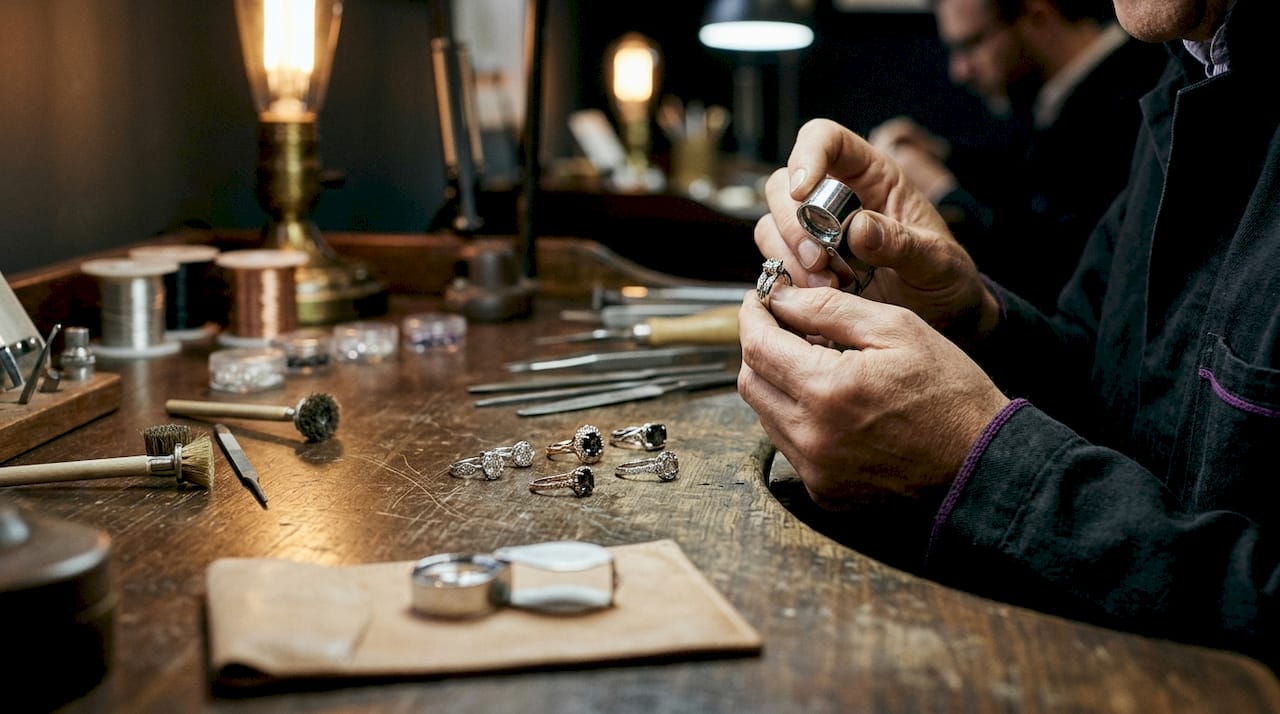
Visual luxury comes from restraint and quality finishing, not raw material cost. Clean lines, balanced proportions, and a polished surface convince the eye far more reliably than ornate decoration or a high price tag. A simple bezel-set pendant in sterling silver reads as expensive when the edges are crisp and the finish is uniform. The same design in a lightweight, roughly finished metal reads as cheap immediately.
Weight and setting type are the two fastest signals your eye and hand use to judge quality. Prong and bezel settings, where the stone is held by metal rather than glued, signal craftsmanship. A piece with noticeable heft feels premium before you even look closely. Lightweight metals and adhesive-set stones are the clearest giveaways of costume-grade construction.
2. What materials define demi-fine and affordable luxury jewelry?
Demi-fine jewelry is the leading affordable luxury segment. It uses 14K or 18K gold vermeil over sterling silver, or high-grade stainless steel as a base, delivering water resistance and longevity that standard costume jewelry cannot match. The category fills the gap between a $15 fashion ring and a $2,000 fine jewelry piece.
The core materials to look for include:
- Gold vermeil: 14K or 18K gold plated over sterling silver. Offers real gold color with a silver base.
- Sterling silver: Solid 92.5% silver. Tarnishes slowly and polishes well.
- Stainless steel: Highly durable and hypoallergenic. Holds its finish longer than most plated metals.
- PVD coatings: Physical Vapor Deposition creates a bond between the coating and the base metal at a molecular level. PVD coatings outperform standard plating for wear resistance.
- Lab-grown gemstones: Chemically identical to mined stones. Moissanite, for example, scores 9.25 on the Mohs hardness scale, making it one of the most durable gemstone options available.
Pro Tip: Check for a plating thickness above 2.5 microns on gold vermeil pieces. Anything thinner wears through within months of regular use. Reputable sellers list this specification; if they don’t, ask.
3. Top jewelry styles that project a luxury look on a budget
Certain jewelry types consistently read as elevated regardless of price point. The key is that their design logic is inherently restrained. A balanced jewelry collection for cost-conscious shoppers includes:
- Tennis bracelets: A continuous line of matched stones in a uniform setting creates a formal, high-value look. The repetition and symmetry do the work.
- Hoop earrings: A thick, polished hoop in gold vermeil or PVD-coated steel looks expensive because the form is simple and the finish is everything.
- Bezel-set pendants: The metal wraps the stone completely, which looks intentional and refined. The Lax Necklace from Merijaan is a strong example of this principle applied to an everyday piece.
- Minimalist chains: An O-chain or box chain in sterling silver layers cleanly and adds presence without competing with an outfit.
- Stud earrings: A single well-cut stone in a prong or bezel setting reads as classic fine jewelry at any price.
- Statement cuffs: A wide, smooth cuff in polished metal commands attention through proportion alone.
Layering two or three minimalist chains at different lengths creates a styled, intentional look that reads as curated rather than budget-conscious. Color harmony matters here. Mixing warm gold tones with cool silver in the same stack creates visual noise. Staying within one metal family keeps the look cohesive and polished.
Pro Tip: When layering necklaces, vary the chain length by at least 2 inches between each piece. Chains that sit too close together tangle and lose their individual presence.
4. How ethical and eco-friendly sourcing adds real value
Affordable luxury is now defined by accessible craftsmanship and ethical transparency, not exclusive materials. This shift changes what “value” means for a piece of jewelry. A ring made with a recycled silver alloy and a lab-grown stone carries a story that a mined-stone piece at ten times the price cannot always match.
The practices that signal genuine ethical commitment include:
- Recycled alloys: Closed-loop metal recovery reduces mining demand. Brands that use recycled sterling silver or reclaimed gold reduce their environmental footprint without compromising quality.
- Fairmined certification: Partnerships with Fairmined-certified suppliers demonstrate brand transparency and guarantee miners receive fair wages.
- Lab-grown gemstones: These stones are conflict-free by definition. They require no mining, produce no displacement of communities, and cost a fraction of mined equivalents.
- Digital traceability: Digital transparency tools that were once limited to luxury tiers now let mass-market shoppers verify sourcing directly. QR codes and material certificates are increasingly standard.
Merijaan builds its entire collection around lab-grown moissanite and ethical production, and directs 100% of profits back to the artisans who make each piece. That model is a direct expression of what affordable luxury culture is becoming.
5. Practical buying tips for choosing the right affordable pieces
Choosing a piece that holds up and looks expensive requires checking a few specific things before you buy.
- Check the weight. Pick up the piece or read the product weight if buying online. Substantial weight signals denser metal and better construction.
- Examine the finish. Look for uniform polish with no rough edges, tool marks, or uneven plating at the joints. These details are visible in good product photography.
- Match metal tone to your skin undertone. Warm undertones (yellow, peachy) look best with yellow gold or rose gold. Cool undertones (pink, bluish) suit white gold, silver, and platinum-tone metals.
- Verify plating specifications. Gold vermeil above 2.5 microns and PVD coatings are the two durability benchmarks worth confirming before purchase.
- Avoid over-accessorizing. Three well-chosen pieces outperform seven competing ones. Restraint is the design principle that separates an expensive-looking stack from a cluttered one.
- Ask about stone setting method. Prong-set and bezel-set stones are mechanically secured. Glued stones are a durability red flag in any price range.
- Look for material transparency. Brands that list alloy composition, plating thickness, and gemstone origin are more trustworthy than those that use vague terms like “gold-tone” or “crystal.”
The Triesen Bracelet from Merijaan is a useful reference point for what material transparency looks like in practice. The product listing specifies construction details rather than relying on lifestyle photography alone.
Key Takeaways
Affordable luxury jewelry delivers genuine visual impact through material quality, restrained design, and ethical sourcing rather than a high price tag.
| Point | Details |
|---|---|
| Demi-fine is the benchmark | Look for gold vermeil above 2.5 microns or PVD-coated stainless steel for lasting wear. |
| Design restraint signals quality | Clean lines and uniform finishing convince the eye of luxury more than decoration does. |
| Weight and setting matter | Prong or bezel settings and noticeable heft are the fastest indicators of real craftsmanship. |
| Ethics add measurable value | Lab-grown stones and recycled alloys lower cost while raising the piece’s story and integrity. |
| Restraint beats volume | Three well-chosen, cohesive pieces project more polish than a crowded stack of seven. |
Why I think “affordable” and “luxury” stopped being opposites
I spent years assuming that price was the honest signal of quality in jewelry. A higher number meant better materials, better craft, better everything. That assumption collapsed the first time I held a well-made sterling silver piece with a bezel-set moissanite next to a mined-diamond ring at five times the cost. The visual difference was negligible. The ethical difference was not.
What I’ve found is that the consumers who look most put-together are rarely the ones spending the most. They’re the ones who understand proportion, finish, and restraint. They buy one excellent minimalist chain instead of four mediocre ones. They choose a Saint-Moritz Necklace with clean construction over a trend piece that will look dated in eight months.
The uncomfortable truth about jewelry is that most people cannot tell the difference between a $3,000 diamond and a $300 lab-grown moissanite in normal lighting. What they can tell is whether a piece looks considered or careless. That judgment comes from design and finish, not price.
The future of affordable luxury is not about faking fine jewelry. It’s about redefining what fine means. Craftsmanship, traceability, and timeless design are the new markers of value. Price is just one input, and increasingly, it’s not the most important one.
— Ammar
Merijaan’s collection for the cost-conscious jewelry lover
Merijaan was built for exactly this kind of buyer. Every piece in the collection uses lab-grown moissanite and ethically sourced materials, with construction details listed openly so you know what you’re getting. The designs are restrained, the finishing is hand-checked, and 100% of profits go directly to the artisans behind each piece.
The Saint-Moritz Necklace is a strong starting point if you want a single piece that works across every occasion. For bracelets, the Crans-Montana Bracelet delivers the weight and finish that separates demi-fine from costume. If you’re building a collection from scratch, the Meri Jaan Jewelry Club is a practical resource for guidance on pairing and styling.
FAQ
What is demi-fine jewelry?
Demi-fine jewelry uses precious metal plating, such as 14K or 18K gold vermeil, over a durable base like sterling silver or stainless steel. It offers the look of fine jewelry at a significantly lower price point.
Why do affordable rings sometimes look expensive?
Affordable rings look expensive when they use prong or bezel settings, have noticeable weight, and feature clean, uniform finishing. Design restraint and quality construction matter more than material cost.
Are lab-grown gemstones a good alternative to mined stones?
Lab-grown gemstones are chemically identical to mined stones and are conflict-free by definition. Moissanite, for example, is harder than most natural gemstones and costs a fraction of a comparable diamond.
How do I know if gold plating will last?
Gold vermeil with a plating thickness above 2.5 microns offers durability close to fine jewelry. PVD coatings provide even greater wear resistance and are the most durable option in the affordable luxury category.
What is understated luxury jewelry?
Understated luxury jewelry prioritizes simple, refined design over ornamentation. It relies on quality materials, precise finishing, and balanced proportions to project elegance without drawing attention to its price.

