
Ethical jewelry is defined as jewelry produced through transparent supply chains, fair labor practices, and responsible sourcing that protects both people and the environment. The term covers everything from how metals are mined to how artisans are paid. Industry standards like the Responsible Jewellery Council (RJC), Fairmined, and Fairtrade Gold provide independent verification of these claims. Understanding what separates genuinely ethical pieces from vague marketing promises is the first step toward buying with confidence.
What is ethical jewelry, and why does it matter?
Ethical jewelry meaning goes beyond a label. It requires full supply chain transparency, including confirmation of no child labor, fair wages, safe working conditions, and conflict-free materials. That combination of standards is what separates a truly responsible piece from one that simply claims to be.
The distinction between ethical and sustainable jewelry is worth clarifying. Sustainable jewelry focuses primarily on environmental impact, such as reducing carbon emissions or using recycled materials. Ethical jewelry centers on human welfare, though the best brands address both. A piece can be environmentally sustainable yet still produced under exploitative labor conditions.
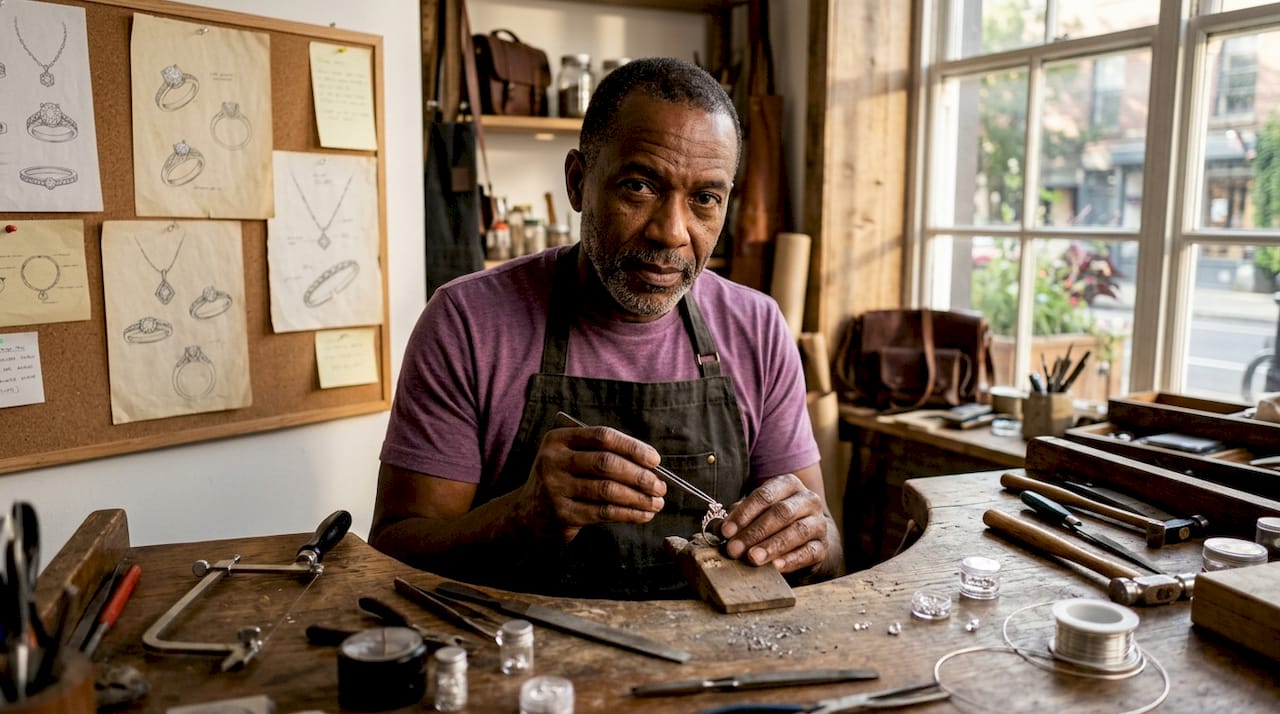
Ethical sourcing also means traceability. Brands that disclose the specific mine, artisan cooperative, or region where their metals and gems originate give shoppers real accountability. That level of detail is the clearest signal that a brand’s ethical claims are grounded in fact rather than marketing copy.
What certifications and standards define ethical jewelry?
Independent certifications are the most reliable way to verify ethical claims. Three standards lead the industry.
- Responsible Jewellery Council (RJC): Audits the full supply chain for human rights, labor rights, environmental impact, and business ethics. RJC certification covers miners, refiners, manufacturers, and retailers.
- Fairmined: Certifies gold from responsible artisanal and small-scale mining organizations. It guarantees fair prices, safe working conditions, and community development funds.
- Fairtrade Gold: Similar to Fairmined, it sets minimum prices for gold and requires a social premium paid directly to mining communities.
Established certifications like RJC, Fairmined, and Fairtrade Gold audit supply chains and labor practices to verify ethical sourcing. That audit process is what separates a certified brand from one that self-declares its ethics without external review.
Reading certifications effectively requires checking scope. A brand might hold RJC certification for its retail operations but not for its upstream supply chain. Ask which parts of the supply chain the certification covers, not just whether a logo appears on the website.
Pro Tip: Search the RJC, Fairmined, and Fairtrade Gold databases directly to confirm a brand’s certification status. A logo on a website is not the same as active, audited certification.
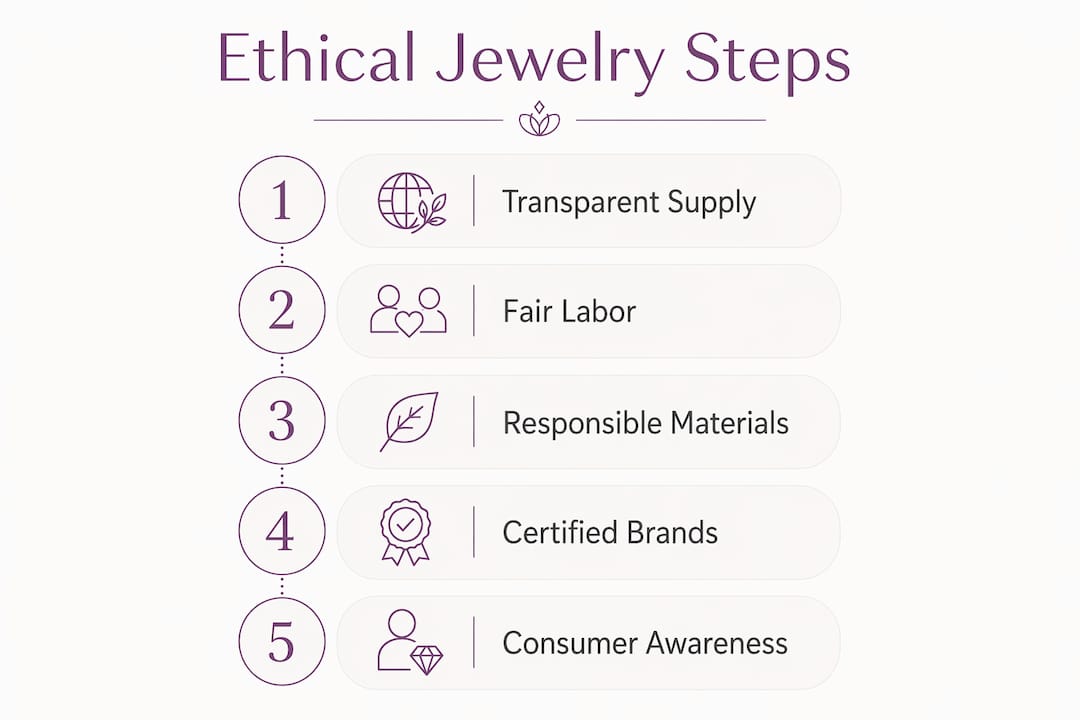
The term “ethical” is frequently misused in marketing. Shoppers should demand audited certifications and precise material origins rather than accepting vague language like “responsibly sourced” or “ethically inspired” without documentation.
How do labor practices and community impact factor in?
Fair labor is the human core of ethical jewelry. The key components are living wages, safe workplaces, and a strict prohibition on child labor. Each element is auditable, which is why certifications matter so much.
The economic impact on mining communities is significant. Some ethical artisans earn five times the average local wage in Kenya. That wage premium does not just benefit individual workers. It funds school fees, healthcare, and local business growth across entire communities.
A common misconception is that “conflict-free” equals ethical. It does not. “Conflict-free” alone is insufficient for ethical assurance. A diamond can be conflict-free under the Kimberley Process and still come from a mine with dangerous working conditions, poverty-level wages, and zero community reinvestment.
True ethical jewelry requires verifying that profits benefit small-scale mining communities through local economic development, not only avoiding conflicts. Brands that channel revenue back into artisan wages, cooperative ownership, and community infrastructure create lasting change. Avoiding harm is the floor, not the ceiling.
Ethical jewelry brands that maximize local impact typically share:
- Documented wage data compared to local averages
- Partnerships with artisan cooperatives rather than anonymous middlemen
- Community development programs funded by a percentage of sales
- Third-party audits of working conditions at the source
Merijaan channels 100% of its profits back to the people who make its jewelry. That structure directly addresses the gap between conflict-free claims and genuine community benefit.
What materials and sourcing methods make jewelry ethical and sustainable?
The materials in a piece determine much of its ethical footprint. Recycled gold and silver require no new mining, which eliminates the labor and environmental risks associated with extraction. Lab-grown stones, including moissanite and lab-grown diamonds, are produced in controlled environments with no mining displacement, no child labor risk, and a significantly smaller environmental impact than mined equivalents.
| Material | Ethical characteristic | Key consideration |
|---|---|---|
| Recycled gold | No new mining required | Verify third-party recycled content certification |
| Fairmined gold | Fair wages and community premiums | Confirm active Fairmined certification |
| Lab-grown moissanite | No mining, conflict-free by nature | Check brand transparency on production methods |
| Lab-grown diamonds | Controlled production, no displacement | Distinguish from mined diamonds with certification |
| Fairtrade gold | Minimum price guarantee for miners | Confirm Fairtrade Gold audit scope |
The Kimberley Process is widely cited but often fails to track human rights abuses or ecological damage. It tracks the movement of rough diamonds to prevent conflict financing, but it does not audit wages, working conditions, or environmental practices. Relying on the Kimberley Process alone as proof of ethical sourcing is a significant gap in due diligence.
Lab-grown moissanite, the core material in Merijaan’s collections, sidesteps these sourcing concerns entirely. It delivers the same visual brilliance as mined stones without the supply chain complexity. For shoppers who want a certified ethical necklace without navigating complex mine-of-origin documentation, lab-grown materials offer a clear path.
Pro Tip: Ask brands for a material origin statement in writing. A brand confident in its sourcing will provide specific details, not just a general claim of responsibility.
How can consumers identify ethical jewelry brands?
Identifying genuinely ethical brands requires asking specific questions, not accepting general claims. The following checklist gives shoppers a practical framework.
- Does the brand hold active certification from RJC, Fairmined, or Fairtrade Gold?
- Does it disclose the specific origin of its metals and gemstones?
- Does it publish wage data or artisan partnership details?
- Does it explain how profits benefit mining or production communities?
- Does it use recycled metals or lab-grown stones as part of its material strategy?
- Does it offer made-to-order options that reduce overproduction waste?
Pre-owned and estate jewelry offers a sustainable and ethical alternative that requires no new mining or manufacturing. Buying a vintage piece eliminates the upstream supply chain entirely. For shoppers who prioritize environmental impact above all else, pre-owned is the most direct option.
Transparency and traceability are the two clearest signals of a trustworthy brand. Ethical jewelry brands disclose artisan or mine origin details rather than hiding behind vague supplier networks. If a brand cannot tell you where its gold came from, that silence is itself informative.
Style and ethics are not in conflict. Pieces like the Engadine Bracelet from Merijaan show that well-designed ethical jewelry holds its own against any conventionally sourced alternative. Shoppers can build outfits around ethical statement pieces without compromising on aesthetics. A moissanite pendant, a recycled silver cuff, or a Fairmined gold ring each carries a story that adds meaning to the design.
Ethical jewelers emphasize not only sourcing but also product quality, design, and fair pricing to create long-term value. That combination matters because a piece bought for its ethics and worn for decades is far more sustainable than a fast-fashion alternative replaced every season.
Key Takeaways
Ethical jewelry is defined by supply chain transparency, fair labor, and responsible materials. Certifications like RJC, Fairmined, and Fairtrade Gold are the most reliable way to verify those claims.
| Point | Details |
|---|---|
| Certifications matter most | RJC, Fairmined, and Fairtrade Gold provide audited proof of ethical sourcing. |
| “Conflict-free” is not enough | Full ethical assurance requires fair wages, safe conditions, and community reinvestment. |
| Lab-grown materials simplify sourcing | Moissanite and lab-grown diamonds eliminate mining supply chain risks entirely. |
| Transparency is the clearest signal | Brands that disclose specific material origins are more trustworthy than those using vague claims. |
| Pre-owned jewelry is a strong option | Buying estate or vintage pieces removes all new-production ethical concerns. |
Why I think ethical jewelry is the most underrated investment you can make
Most people treat jewelry as decoration. I see it differently. Every piece you buy is a vote for the production system behind it. That framing changes how I evaluate a purchase entirely.
The part that surprises most shoppers is how much the ethical premium has shrunk. Lab-grown moissanite delivers the same fire and brilliance as a mined diamond at a fraction of the cost. The savings do not come from cutting corners on quality. They come from removing the extraction and middleman layers that inflate mined stone prices without adding beauty.
What I find most compelling about brands like Merijaan is the profit model. Returning 100% of profits to the artisans who make the jewelry is not a marketing line. It is a structural commitment that changes who benefits from each sale. That model is rare, and shoppers who find it should recognize its value.
Ethical jewelry works best when paired with excellent design and fair pricing, creating a benefit for both consumers and communities. The pieces I return to most are the ones that look beautiful and carry a clear story. That combination creates lasting satisfaction in a way that anonymous fast-fashion jewelry never does.
— Ammar
Merijaan’s ethical collections: where craftsmanship meets conscience
Merijaan builds every piece around lab-grown moissanite, a material that is conflict-free by design and requires no mining supply chain. The brand’s commitment goes further. Every dollar of profit goes directly back to the artisans who craft each piece.
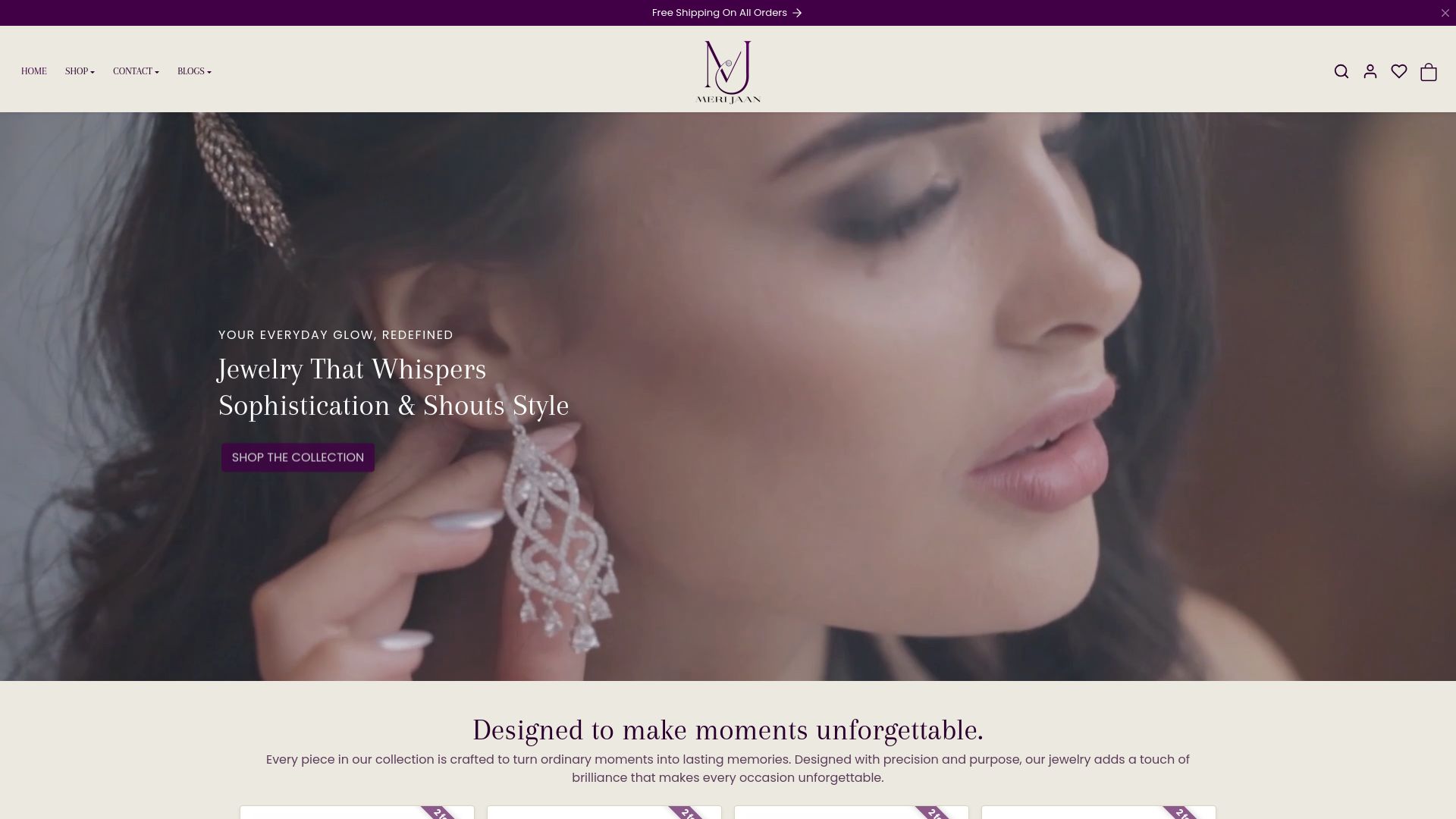
The Saint-Moritz Necklace is a strong starting point for shoppers ready to make their first ethical purchase. It pairs the brilliance of lab-grown moissanite with the kind of timeless design that holds value across years, not just seasons. For shoppers building a wardrobe of ethical statement pieces, Merijaan’s full collection offers rings, bracelets, and necklaces that meet the same standard of transparent sourcing and artisan support.
FAQ
What is the definition of ethical jewelry?
Ethical jewelry is produced through transparent supply chains that guarantee fair wages, safe working conditions, no child labor, and conflict-free materials. Independent certifications like RJC, Fairmined, and Fairtrade Gold verify these standards.
Is “conflict-free” the same as ethical jewelry?
No. Conflict-free means a stone was not used to finance armed conflict, but it does not address wages, working conditions, or environmental practices. Full ethical sourcing requires auditing all of those factors.
What certifications should I look for when buying ethical jewelry?
The three most credible certifications are the Responsible Jewellery Council (RJC), Fairmined, and Fairtrade Gold. Each audits different parts of the supply chain, so checking which parts a brand’s certification covers is important.
Are lab-grown stones considered ethical?
Lab-grown moissanite and lab-grown diamonds are produced in controlled environments with no mining displacement, making them conflict-free by nature. They are widely recognized as one of the most straightforward ethical material choices available.
How do I spot greenwashing in jewelry marketing?
Brands that use terms like “responsibly sourced” or “ethically inspired” without linking to audited certifications or specific material origins are likely greenwashing. Ask for documentation, and verify certification status directly through the certifying body’s public database.

