
Sustainable jewelry is defined as pieces made from recycled metals, lab-grown gemstones, and ethically sourced materials that minimize environmental harm across the full supply chain. To choose sustainable jewelry aligned with 2026 trends, you need to look beyond the stone and consider the entire lifecycle of a piece. 78% of American consumers now factor sustainability into jewelry purchases, up from 52% in 2020. That shift signals a fundamental change in how people assign value to what they wear. Sustainability in 2026 means durability, transparency, and circularity, not just a recycled metal stamp.
What materials define sustainable jewelry in 2026?
The material a piece is made from determines most of its environmental footprint. Recycled gold, lab-grown diamonds, surgical steel, and titanium each represent a different point on the sustainability spectrum, and knowing the trade-offs helps you choose with confidence.
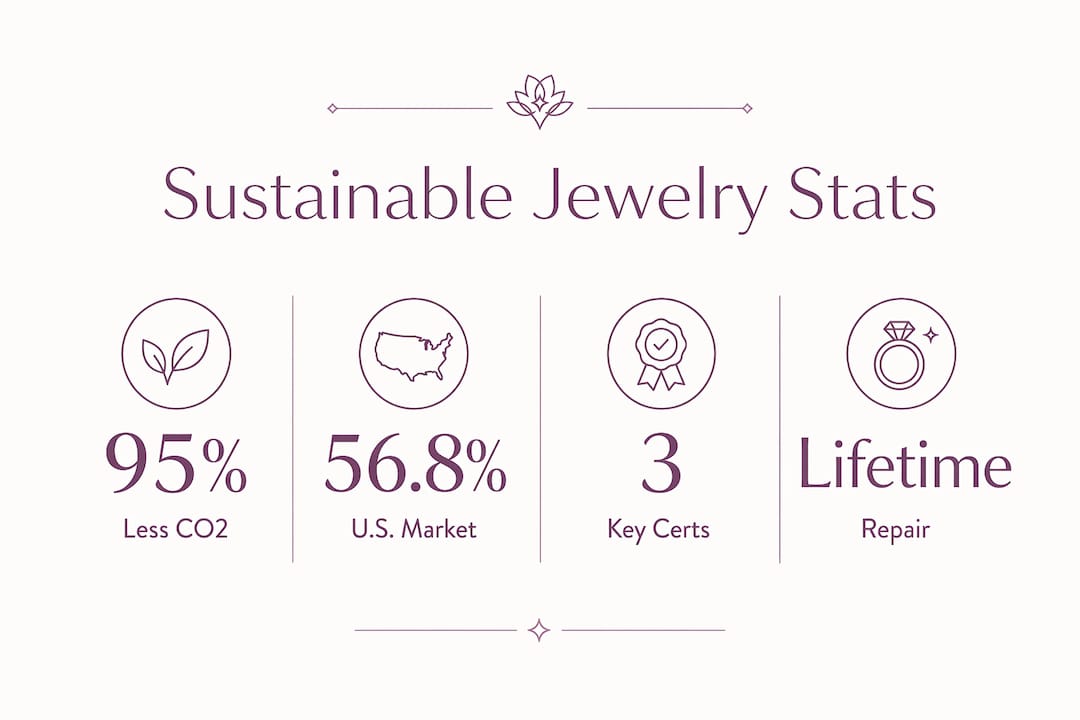
Recycled gold is the gold standard for eco-friendly jewelry choices right now. Recycled gold produces 95% less CO2 than newly mined gold. That figure alone makes it one of the most impactful material swaps a jewelry buyer can make.
Lab-grown diamonds have reshaped the engagement ring market entirely. Lab-grown diamonds now hold 56.8% of the US one-carat engagement ring market and cost 20–30% of what natural diamonds do. That cost difference makes ethical jewelry trends in 2026 accessible to a much wider audience than ever before. The environmental advantage is real, though lab-grown diamond energy use remains significant and is only improving as producers shift to renewable energy sources.
Surgical steel and titanium offer extreme durability, hypoallergenic properties, and recyclability. They often contain recycled content already. The trade-off is aesthetic: both metals carry a more industrial look that some shoppers find less luxurious than gold or platinum. That perception is shifting as fashion-forward sustainable jewelry brands incorporate these materials into refined, minimalist designs.
| Material | Sustainability | Cost | Durability | Aesthetics |
|---|---|---|---|---|
| Recycled gold | Very high | Moderate to high | High | Classic, warm |
| Lab-grown diamond | High (energy dependent) | Low to moderate | Very high | Identical to mined |
| Surgical steel | High | Low | Very high | Industrial, modern |
| Titanium | High | Low to moderate | Very high | Sleek, minimal |
| Moissanite | Very high | Very low | Very high | Brilliant, colorful |
Pro Tip: Ask brands specifically whether their recycled gold carries a chain-of-custody certificate. The label “recycled” without documentation is a marketing claim, not a verified fact.
How do you verify ethical sourcing and supply chain transparency?
Greenwashing is the single biggest obstacle to making genuinely ethical jewelry choices. A brand can use the word “sustainable” freely without meeting any standard. Certifications and documentation are the only reliable filters.
The Responsible Jewellery Council (RJC), Fairtrade Gold, and Fairmined are the three most recognized certification bodies in the jewelry industry. RJC certification covers the full supply chain from mine to retail. Fairtrade and Fairmined specifically address artisanal and small-scale mining communities, guaranteeing fair wages and safe conditions. A piece carrying any of these marks has been audited, not just self-declared.
Chain-of-custody documentation and product passports are the next level of transparency. A product passport traces a piece from raw material to finished item, recording every step. This is the difference between a brand saying “we care about sourcing” and a brand proving it. Understanding what ethical jewelry means in practice helps you ask the right questions before you buy.
Before purchasing, ask these questions directly:
- Does this piece carry RJC, Fairtrade, or Fairmined certification?
- Can you provide chain-of-custody documentation for the metals and stones?
- Where are the gemstones sourced, and are they conflict-free?
- Does your lab-grown stone producer use renewable energy?
- What happens to this piece at end of life?
Vague answers like “we work with responsible suppliers” are red flags. Trustworthy brands name their suppliers, share audit results, and publish supply chain reports publicly.
Pro Tip: Search a brand’s website for the word “audit” or “certification.” If neither appears anywhere, the sustainability claims are likely marketing copy rather than verified practice.
How do design and durability make jewelry more sustainable?
The most sustainable piece of jewelry is the one that lasts decades. Brands now focus on lifetime repair, circular design, and customer education to maximize sustainability impact. A beautifully sourced piece that breaks after two years and ends up in a drawer is not a sustainable choice.
The jewelry industry is transitioning from disposable fashion to investment pieces that emphasize transparency and longevity as markers of quality. That shift changes what “good design” means. A ring with a modular setting that allows stone replacement, or a necklace with a reinforced clasp, is more sustainable than a delicate piece that cannot be repaired.
Brands offering warranties, lifetime repair services, and recycling programs demonstrate real commitment to circularity. Repair and recycling program usage has increased by 30% as consumers demand these services. When a brand offers to buy back or recycle old pieces, it closes the loop on material waste.
Manufacturing also plays a direct role. Advanced CAD modeling and digital design validation reduce material waste by eliminating trial-and-error production runs. Fewer rejected pieces mean less wasted metal and fewer discarded stones. This is how jewelry brands reduce waste at the production level, before a piece ever reaches a customer.
Here is what to look for when evaluating design for sustainability:
- Repairability. Can clasps, prongs, and settings be replaced by a standard jeweler? Proprietary designs that require brand-specific repair lock you into expensive service or early disposal.
- Modularity. Pieces with interchangeable elements extend wearability and reduce the need to buy new items for different occasions.
- Warranty length. A lifetime warranty signals that a brand built the piece to last. A 90-day warranty signals the opposite.
- Buy-back or recycling programs. These programs recover materials and reduce landfill waste. They also indicate a brand that thinks beyond the point of sale.
- Timeless design. Trend-driven pieces become unwearable faster. Classic silhouettes stay relevant for decades and reduce the psychological pressure to replace them.
How do you balance style, budget, and ethics in 2026?
Ethical jewelry trends in 2026 do not require you to sacrifice style or spend beyond your means. The market has matured enough that you can find genuinely sustainable pieces across a wide price range.
Lab-grown stones offer the clearest cost advantage. A lab-grown diamond engagement ring costs a fraction of its mined equivalent while delivering identical optical properties. The trade-off is resale value: lab-grown diamonds depreciate faster than natural diamonds on the secondary market. If you plan to keep a piece for life, that trade-off is irrelevant. If you view jewelry as an investment asset, it matters.
Vintage and antique jewelry provide sustainable options by diverting existing materials from waste without requiring any new extraction or production. A vintage ring from an estate sale carries zero new mining impact. It also carries a story, which many shoppers find more meaningful than a brand-new piece. This is the circular economy model applied to personal style.
Recycled metals often cost slightly more than standard alloys due to processing and certification costs. That premium is real but modest, and it funds the infrastructure that makes responsible sourcing possible. Think of it as the cost of proof.
A few practical tips for maximizing both value and ethics:
- Choose timeless silhouettes over trend-specific designs to extend the wearable life of each piece.
- Mix metals intentionally. Layering recycled gold with titanium or surgical steel creates a fashion-forward look while keeping costs manageable.
- Prioritize one high-quality piece over several lower-quality ones. A single well-made ring with a lab-grown moissanite outlasts a drawer full of fast-fashion jewelry.
- Check whether a brand’s conflict-free jewelry options include certified documentation, not just marketing language.
- Ask about layaway or payment plans for higher-end sustainable pieces. Many ethical brands offer them specifically to make responsible purchasing accessible.
Key Takeaways
The most effective way to choose sustainable jewelry in 2026 is to evaluate materials, certifications, design longevity, and brand transparency together, not as separate boxes to check.
| Point | Details |
|---|---|
| Prioritize certified materials | Recycled gold and lab-grown stones carry the lowest environmental footprint when backed by RJC or Fairtrade certification. |
| Demand documentation | Chain-of-custody records and product passports separate verified sustainability from marketing claims. |
| Design for longevity | Repairable, modular, and timeless pieces reduce waste more effectively than material choice alone. |
| Use vintage as a strategy | Antique and estate jewelry carries zero new extraction impact and often costs less than new sustainable pieces. |
| Match budget to values | Lab-grown stones cut costs significantly; recycled metal premiums are modest and fund responsible sourcing infrastructure. |
Why I think most sustainable jewelry advice misses the point
Most guides on ethical jewelry trends in 2026 focus almost entirely on materials. Recycled gold, lab-grown diamonds, conflict-free sourcing. These things matter. But the conversation stops too early.
The real sustainability question is: will you still wear this piece in 20 years? A ring made from recycled gold that falls apart in three years is less sustainable than a well-made piece from conventional materials that lasts a lifetime. Longevity is the multiplier that makes every other sustainability factor more meaningful.
What I have seen shift most noticeably is consumer appetite for provenance. Shoppers are no longer satisfied with a brand’s word. They want the audit report. They want the supplier’s name. They want to know whether the lab growing their diamond runs on solar power. That demand for proof is the healthiest development in this space in years.
The brands worth supporting are the ones that share uncomfortable details alongside the good ones. A brand that admits its lab-grown diamond production still relies partly on fossil fuels but is actively transitioning to renewables is more trustworthy than one claiming perfect sustainability with no specifics. Transparency about imperfection is more credible than polished claims of perfection.
Sustainable jewelry is becoming a form of personal storytelling. The piece you wear carries a provenance, a set of values, and a commitment to the people who made it. That is a richer relationship with an object than fast fashion ever offered.
— Ammar
Merijaan’s approach to sustainable, lasting jewelry
Merijaan builds its collections around lab-grown moissanite and recycled metals, combining ethical sourcing with designs made to last. Every piece reflects a commitment to quality craftsmanship that holds up over decades, not seasons.
Merijaan’s lab-grown stones deliver the same brilliance as mined gems at a fraction of the environmental and financial cost. The brand’s focus on timeless design means you are not buying into a trend. You are choosing a piece with staying power. Notably, 100% of Merijaan’s profits go directly back to the artisans who make the jewelry, making every purchase a direct investment in ethical labor. Explore Merijaan’s sustainable diamond jewelry collection and find pieces that align with both your values and your style.
FAQ
What makes jewelry truly sustainable in 2026?
Sustainable jewelry in 2026 combines recycled or responsibly sourced metals, lab-grown or ethically mined gemstones, and transparent supply chain documentation. Longevity and repairability are equally important factors alongside material sourcing.
Are lab-grown diamonds better for the environment than mined diamonds?
Lab-grown diamonds eliminate mining-related land disruption and community harm, but their energy use remains significant. Producers shifting to renewable energy sources are closing that gap, making lab-grown diamonds the more sustainable choice overall.
How do I spot greenwashing in jewelry marketing?
Look for specific certifications like RJC, Fairtrade, or Fairmined rather than vague terms like “responsible” or “eco-friendly.” Brands with genuine sustainability commitments publish supplier names, audit results, and chain-of-custody documentation.
Is vintage jewelry a sustainable option?
Vintage and antique jewelry are among the most sustainable choices available because they require no new mining or production. They extend the life of existing materials and often carry unique designs unavailable in new collections.
Does sustainable jewelry cost more?
Lab-grown stones cost significantly less than mined equivalents, making ethical jewelry more affordable than it has ever been. Recycled metals carry a modest premium over standard alloys, but that cost funds the certification and processing infrastructure that makes responsible sourcing verifiable.
Recommended
- Sophisticated Yet Sustainable: Why Celebrities Love Ethical Jewelry – The Meri Jaan
- Lab-Grown vs. Mined Diamonds in 2026: Eco-Friendly Choice – The Meri Jaan
- Why Moissanite Is the Future of Ethical Jewelry in 2026 – The Meri Jaan
- Eco-Friendly Elegance: Why Moissanite Is the Sustainable Jewelry Choice – The Meri Jaan

