

The most reliable signals are Fairmired or Fairtrade certification with item-level chain-of-custody documents, Responsible Jewellery Council (RJC) membership backed by a specific certificate number, and clear proof for any recycled-metal claim. Ask the seller for item-specific documentation before you buy, not a general sustainability statement. Lab-grown moissanite, like the pieces Merijaan sells, sidesteps most of this verification headache because there’s no mine to audit in the first place.
TL;DR:
- Certification documents such as item-specific chain-of-custody reports and verified certificate numbers are essential for confirming the sustainability claims of jewelry products.
- Vague language like “eco-friendly” or “sustainably sourced” is unreliable unless accompanied by traceable proof, certification logos, and clear source details.
- Recycled-metal claims require specific documentation of the source, mixing recycled and virgin materials without proof is marketing fluff.
- Lab-grown moissanite bypasses most traceability issues because it involves no mining; verify the gemstone’s grade and the seller’s warranty for added confidence.
- Most sustainability certifications track only parts of the supply chain; asking for detailed proof and sourcing information is crucial for ensuring claims are trustworthy.
Table of Contents
- What Schmuck Nachhaltigkeit Zertifikate Actually Guarantee
- What Vague Marketing Language Is Really Hiding
- What Documents Should a Seller Actually Provide?
- Comparing Your Material Options: Metals and Stones
- Your Checklist Before You Pay
- Why Merijaan’s Moissanite Pieces Skip Most of This Verification Headache
- Labor Standards Certifications You’ll See Less Often
- What I’d Prioritize If I Had to Decide Today
- Shop Merijaan’s Lab-Grown Moissanite Collections
- Sources
What Schmuck Nachhaltigkeit Zertifikate Actually Guarantee
“Schmuck Nachhaltigkeit Zertifikate” translates loosely to “jewelry sustainability certificates,” and that’s exactly the confusion at the heart of this topic. Shoppers assume one badge covers everything, from labor conditions to carbon output. It doesn’t. Each certification scheme audits a narrow slice of the supply chain, and knowing which slice matters more than knowing the logo exists.
Gold mining alone accounts for serious environmental damage, from mercury contamination to deforestation, according to an overview from the German Federal Institute for Geosciences and Natural Resources. That’s the backdrop every certification is trying to address, and it explains why independent verification matters more in jewelry than in almost any other consumer category.
Here’s what the major labels actually cover:
- Fairmired and Fairtrade: These certify mine-level social and environmental standards, including fair wages, safer working conditions, and limits on mercury and cyanide use. They audit the mine, not the finished necklace, so the gold’s journey after extraction still needs tracking.
- Responsible Jewellery Council (RJC): RJC certifies companies or facilities, not individual products. A brand can be an RJC member while a specific ring on their site carries no direct proof of certified material. Intertek’s assurance notes confirm this distinction, and it’s one most shoppers never learn until they ask.
- Kimberley Process: This scheme addresses one thing only, blocking diamonds that fund armed conflict. It says nothing about labor conditions, environmental harm, or fair pay, so a “conflict-free” label is a much smaller claim than it sounds.
- Recycled metal claims: No single global standard sets a minimum recycling percentage for jewelry metals. A “recycled gold” ring might contain some reclaimed material or be fully recycled, but without documentation you have no way to tell which.
The gap between company-level certification and product-level proof is where most sustainability claims fall apart. A brand’s homepage might feature every logo in the book while the specific piece you’re eyeing has no traceable link to any of them.
What Vague Marketing Language Is Really Hiding
Words like “eco-friendly,” “sustainably sourced,” and “partially recycled” sound reassuring and mean almost nothing on their own. Utopia’s consumer guide points out that a lot of sustainability messaging in jewelry relies on exactly this kind of soft phrasing, precisely because it can’t be fact-checked the way a certificate number can, according to Utopia’s roundup on sustainable jewelry.
Watch for these patterns when you’re evaluating a product page:
- Unqualified “recycled” claims. If a listing says “recycled gold” without specifying a percentage or source (old jewelry, industrial scrap, electronic waste), treat it as marketing copy, not proof.
- Company-wide statements applied to one product. A brand’s “we’re committed to ethical sourcing” mission page doesn’t tell you anything about the specific ring in your cart.
- Certification logos with no certificate number. A legitimate Fairmired or RJC claim should come with a traceable reference, not just an icon in the footer.
- Selective transparency. Brands that publish detailed labor policies but stay silent on mining origin, or vice versa, are usually highlighting the part of their story that looks best.
- “Sustainably sourced” with no named standard. This phrase carries no legal or industry definition, so it can mean almost anything the brand wants it to.
None of this means every brand using soft language is lying. It means the language alone proves nothing, and you need to ask the follow-up question before you trust it.
What Documents Should a Seller Actually Provide?
Ask for four things before you hand over payment: a certificate number, the mine or refinery name, a chain-of-custody report, and, for gemstones, an independent lab report. A seller who can produce these without hesitation is operating differently from one who deflects to a general mission statement.
Start with the certificate number itself. Every legitimate Fairmired or Fairtrade certification includes a unique identifier you can cross-reference on the certifying body’s own website. Allianz pro Nachhaltigkeit’s guide advises shoppers to request this documentation directly, and reputable sellers rarely resist the ask.
Here’s what to request and why each item matters:
- Certificate number: Lets you verify the claim independently instead of taking the seller’s word for it.
- Mine or refinery name: Ties the metal to a specific, auditable source rather than a vague regional claim.
- Chain-of-custody report: Documents how material moved from mine to finished piece, which organizations like the Earthbeat Foundation treat as a baseline for credible sourcing.
- Independent lab report for gemstones: Confirms origin and treatment, especially important for diamonds and colored stones.
Pro Tip: Copy the certificate number into the certifying organization’s own search tool before you buy, not after. A valid Fairmired or RJC number should return a real mine or company match, and if it doesn’t, that’s your answer.
Company membership and item certification are not the same thing. An RJC member badge on a homepage tells you the company passed an audit at some point. It doesn’t tell you the specific bracelet you’re buying traces back to certified material. Ask which one you’re actually getting.
Comparing Your Material Options: Metals and Stones
Every material path carries its own tradeoffs between cost, verifiability, and environmental footprint. None of these paths is automatically “the sustainable one,” and understanding the tradeoffs is what actually helps you buy well.
Recycled metals cut new mining demand, but the verification gap is real. Without documentation specifying the recycled percentage and source, according to Sustainoverse’s sustainable jewelry guide, you’re trusting a label rather than confirming a fact. Ask specifically whether the entire alloy is recycled or just a portion.
Fairmired and Fairtrade mined metals offer strong social guarantees, fair wages, safer conditions, and mercury limits, but they typically cost more and represent a small fraction of global gold supply. If a seller’s price point looks too low for genuinely certified mined gold, that’s worth questioning.
Lab-grown diamonds and moissanite avoid mining entirely, which removes most of the traceability headache since there’s no mine of origin to document. Moissanite in particular tends to be a strong sustainable pick because it requires less energy to produce than lab-grown diamonds and carries a lower price point without sacrificing durability or sparkle. Energy sourcing for the lab itself still matters. A facility running on a coal-heavy grid has a different footprint than one using renewables, so that disclosure is worth asking about too.
Vintage and secondhand jewelry sidesteps the sourcing question almost entirely since the material already exists, making it one of the most straightforwardly circular options available. It won’t work for every occasion, but for statement pieces it’s worth considering. Merijaan’s own vintage rings collection reflects that same circular logic in a modern setting.
- Recycled metals: lower mining demand, verification depends on documentation.
- Fairmired/Fairtrade metals: strong social guarantees, higher cost.
- Lab-grown stones and moissanite: minimal mining footprint, check energy sourcing.
- Vintage/secondhand: fully circular, availability varies.
Your Checklist Before You Pay
Before you complete a purchase, request the certificate number, chain-of-custody documentation, and the mine or refinery name if metal origin is being claimed. Ask about repair and warranty terms too. A brand confident in its sourcing usually stands behind its craftsmanship just as firmly.
Ask the seller these three questions and pay attention to how directly they answer:
- “Can you provide the certificate number for this specific piece?” A real answer includes a number you can look up. A vague answer restates their mission statement.
- “What percentage of this metal is recycled, and from what source?” Listen for specifics, industrial scrap versus old jewelry versus electronic waste, not just the word “recycled.”
- “What’s your repair or warranty policy if something goes wrong?” Sellers confident in their materials and craftsmanship tend to offer generous terms, since they’re not worried about premature wear.
| What to weigh | Low-proof option | High-proof option |
|---|---|---|
| Documentation | Logo only, no certificate number | Traceable certificate number, checkable online |
| Metal claim | “Eco-friendly” with no source | Named refinery or recycled percentage disclosed |
| Repair policy | Standard limited warranty | Lifetime warranty or repair guarantee |
| Stone origin | Unspecified | Lab-grown with disclosed process, or independently graded |
Price matters, but it shouldn’t be the deciding factor on its own. A cheaper piece with a clear repair policy and traceable materials often beats a pricier one wrapped in vague sustainability language.
Why Merijaan’s Moissanite Pieces Skip Most of This Verification Headache
Lab-grown moissanite removes the mine-to-market traceability problem almost entirely, since the stone never touches a supply chain riddled with the environmental harms outlined by Rainforest Rescue. That’s the core of Merijaan’s approach: rings, necklaces, and stacking sets built around a gemstone that doesn’t require chain-of-custody paperwork because there’s no mining origin to document in the first place.
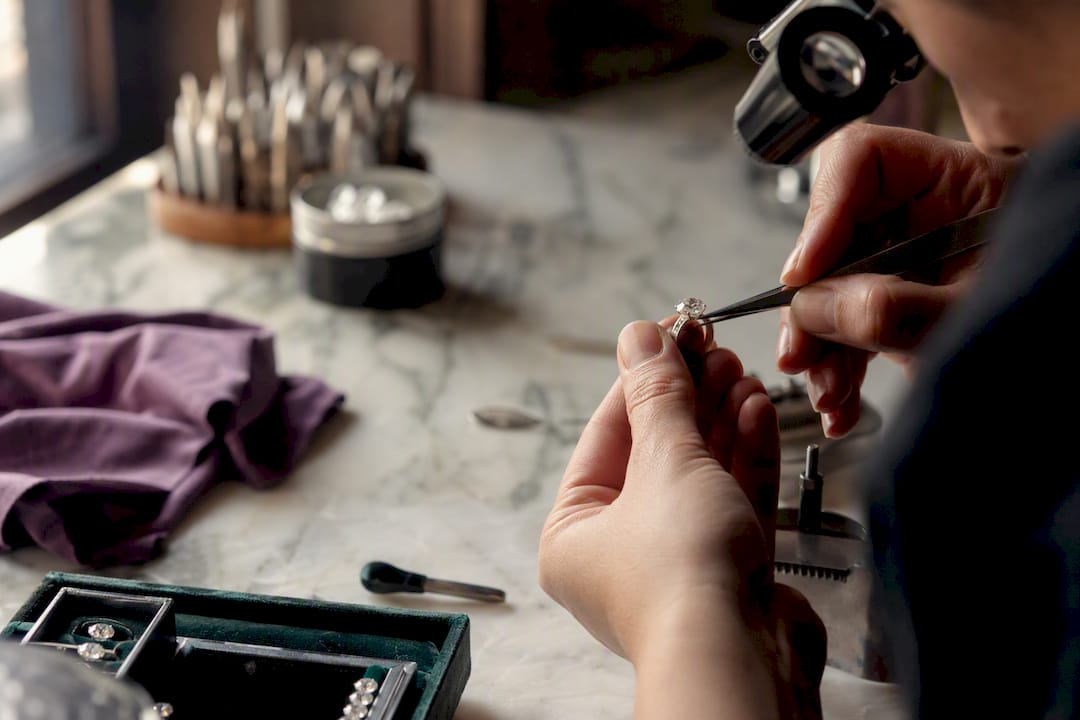
Merijaan backs every piece with a lifetime warranty and unlimited exchanges for club members, which matters more than it sounds. A brand willing to guarantee repairs indefinitely is making a quiet statement about how confident it is in its own materials.
What’s worth checking on the brand’s own pages:
- Product listings that specify moissanite grade and metal plating (18k gold or 925 silver).
- Warranty and exchange terms listed alongside each collection.
- The stated policy that 100% of profits return to the people who make the jewelry, a labor commitment worth reading in full on the sustainable jewelry explainer.
None of this replaces the verification habits from earlier sections. It just means there’s less to verify.
Labor Standards Certifications You’ll See Less Often
Most sustainability conversations in jewelry focus on environmental claims, gold sourcing, recycled metal, conflict-free stones, but labor conditions deserve equal attention. Fairmired and Fairtrade both build labor standards into their mine-level audits, covering wages, working hours, and safety conditions at the extraction site. That’s a meaningful floor, but it only covers mining. It says nothing about the working conditions at the cutting, polishing, or assembly stage further down the chain.
This is where jewelry sustainability gets genuinely harder to verify than most other consumer goods. A gemstone might be ethically mined and then cut in a facility with poor labor oversight, or vice versa. Few consumer-facing certifications track the entire chain end to end, which is part of why Anna Russo’s sustainable jewelry guide recommends treating any single certification as one data point rather than a complete guarantee.
If labor conditions across the whole supply chain matter most to you, ask sellers directly whether their certification covers mining only or extends to cutting and manufacturing too. Most won’t have a complete answer, and that gap itself tells you something. Brands that avoid mining and cutting labor entirely, by using lab-grown materials, sidestep a significant portion of this uncertainty without needing to audit a multi-country supply chain.
What I’d Prioritize If I Had to Decide Today
If you’re standing in a store or staring at a checkout page with limited time, here’s the order that actually protects you: item-level certificate or chain-of-custody documentation first, named independent certification second, and a clear repair or resale policy third. Everything else is secondary.
Recycled-metal claims deserve a specific level of skepticism. Accept them when a seller can name the source, industrial scrap, old jewelry, refined electronic waste, and reject vague “eco-conscious” language with nothing behind it. That single question separates real sourcing from marketing copy more reliably than any logo does.
For engagement purchases or first-time sustainable buyers, I’d lean toward materials that remove the guesswork entirely. Lab-grown moissanite doesn’t require you to chase down a mine name or decode a recycling percentage, which makes it a genuinely practical starting point rather than a compromise.
— Ammar
Shop Merijaan’s Lab-Grown Moissanite Collections
Merijaan builds every piece around lab-grown moissanite specifically because it removes the mine-to-market questions this whole guide walks through, no mine name to trace, no recycled-percentage math required.
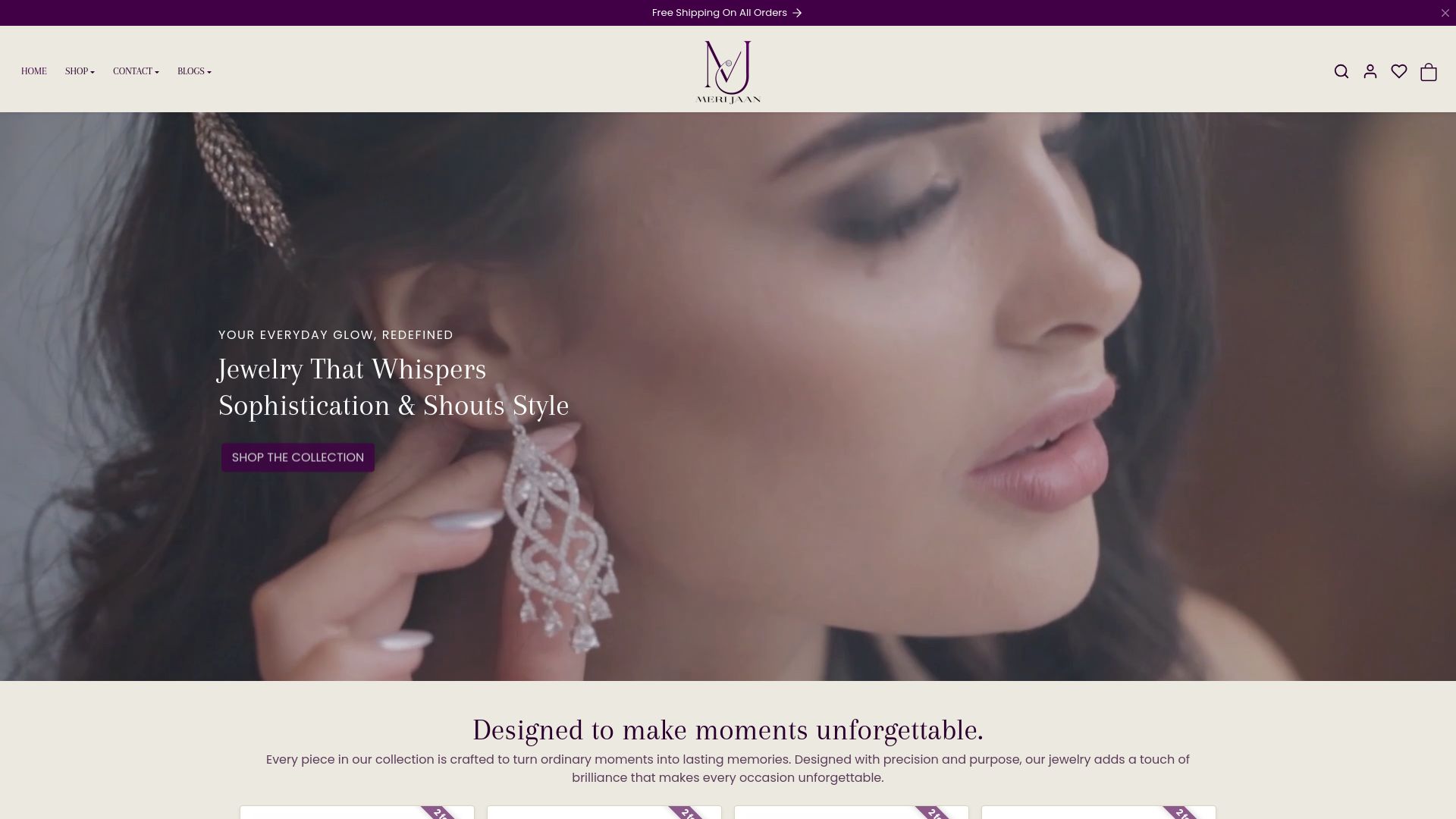
Every ring and necklace comes with a lifetime warranty and, for club members, unlimited exchanges, so the proof isn’t just in the sourcing but in what happens after you buy. Browse the women’s rings collection for engagement and everyday styles, or check the women’s necklaces if you’re shopping for a pendant piece like the Naters necklace. If you’re comparing skin sensitivity alongside sustainability, this guide to hypoallergenic jewelry brands is worth a look too.
Warranty terms and repair details are listed on each product page, so you can check them before you buy rather than after something goes wrong. If a piece catches your eye, that’s the next step: open the product page, read the warranty terms, and see if it fits what you’re looking for.
Sources
- Earthbeat Foundation — resources on responsible sourcing
- Allianz pro Nachhaltigkeit — tips for sustainable gold jewelry
- Utopia — sustainable jewelry: recommendations and pitfalls

