
Quality affordable jewelry is defined by three non-negotiable signals: transparent material disclosures, engineered construction, and honest brand policies. These are the signs of quality affordable jewelry that separate a piece worth buying from one that looks good in photos but fails within weeks. Budget-conscious shoppers who know what to look for can find genuinely well-made pieces without overspending. The difference between a $30 ring that lasts a year and one that tarnishes in a month comes down to a few specific details you can check before you buy.
1. What metal and plating disclosures indicate quality?
Clear base metal disclosure is the first sign of a trustworthy piece. Quality brands name the base metal directly: brass, copper, stainless steel, or sterling silver. Vague terms like “alloy” or “metal” with no further detail are red flags. A brand that hides its base metal is usually hiding something unflattering.
Plating thickness matters more than most shoppers realize. Industry standard for durability is 1–2.5 microns of gold plating. Anything under 0.5 microns wears through within months, leaving visible discoloration and exposed base metal. A quality listing will state the plating thickness in the product description, not just call it “gold-toned.”
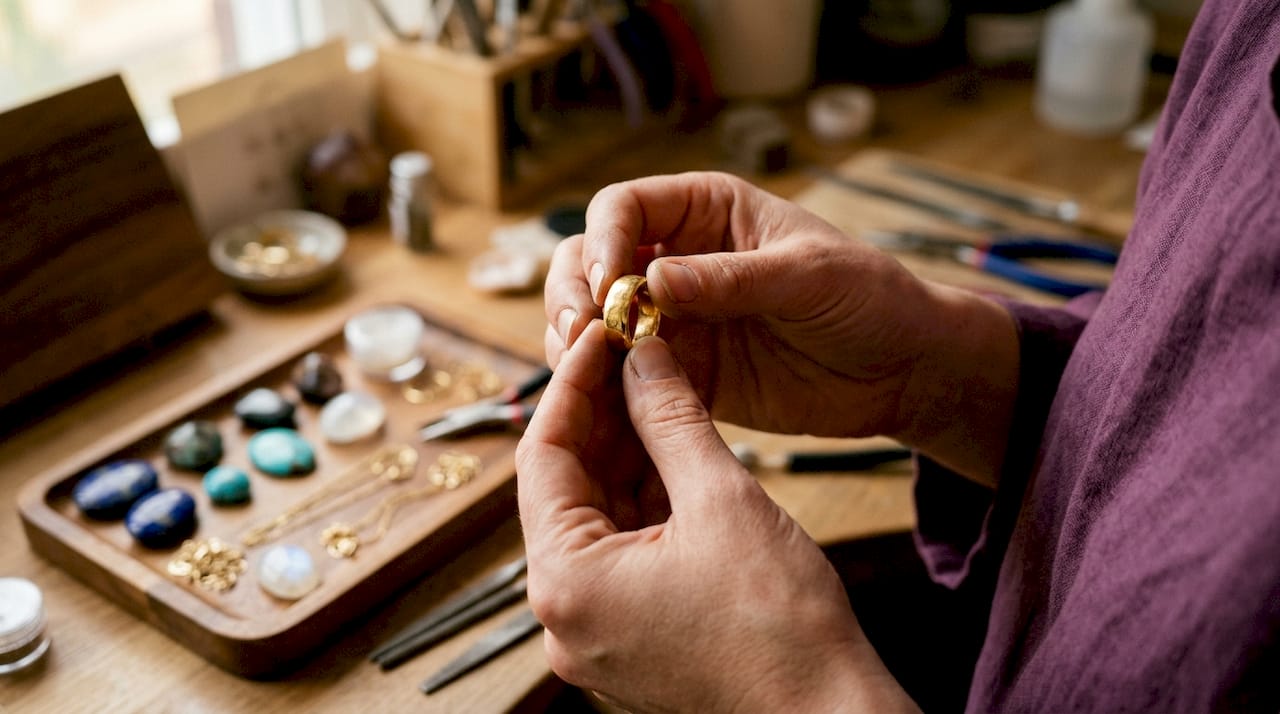
Understanding the difference between gold-plated, gold-filled, and solid gold is also critical. Gold-filled pieces contain a legally required minimum layer of gold bonded under heat and pressure, making them far more durable than standard plating. Solid gold carries a karat stamp (10K, 14K, 18K). If none of these terms appear, the piece is likely lightly plated at best.
Skin-safety claims require specifics. Hypoallergenic statements must name what is absent: nickel-free, lead-free, or cadmium-free. “Skin-friendly” or “hypoallergenic” alone carries no verifiable meaning. Shoppers with sensitive skin should treat vague claims as no claim at all.
- Named base metal: brass, copper, stainless steel, or sterling silver
- Plating thickness stated: 1–2.5 microns is the standard; under 0.5 microns is a red flag
- Metal type stamp: look for 10K, 14K, 18K, or “gold-filled” labeling
- Specific skin-safety terms: nickel-free, lead-free, cadmium-free
Pro Tip: If a product listing uses the word “alloy” without naming the specific metals, treat it as an undisclosed base metal and move on.
2. How to assess craftsmanship and construction quality
The hidden components of a piece tell you more about its quality than the visible design. Clasps, jump rings, and bails that are laser-soldered or made from thick-gauge wire outperform stamped or pinched-open findings by a wide margin. A pinched-open jump ring will loosen with daily wear. A soldered one will not.
Weight is a rough but reliable signal. Solid or well-constructed pieces feel substantial in the hand. Hollow or very lightly plated pieces feel almost weightless. This is not a perfect test, but a ring that feels flimsy usually is. Pair the weight check with a visual inspection of the setting and chain links.
Stone settings deserve close attention. Prong settings should grip the stone evenly on all sides with no gaps. Bezel settings should wrap the stone cleanly without visible glue residue. Glued stones are a construction shortcut that fails quickly, especially with water exposure.
- Clasps and jump rings: look for soldered joints, not pinched-open rings
- Weight and density: solid pieces feel heavier than hollow or lightly plated ones
- Stone settings: prongs should grip evenly; bezels should wrap cleanly with no glue
- Chain links: consistent sizing and shape indicate machine precision or skilled handwork
- Solder seams: check close-up photos for smooth, even joins at connection points
Pro Tip: Request close-up photos of the clasp and back of the piece before buying online. A brand confident in its construction will provide them without hesitation.
Checking durable jewelry for daily wear starts with these construction details, not the design. A beautiful piece with a weak clasp is a piece you will lose.
3. What brand policies and customer feedback signal trustworthiness?
Return policies reveal how much a brand trusts its own product. Brands offering at least 15-day returns with free or low-cost return shipping signal genuine confidence in their quality. Short return windows of under seven days, or policies that require the buyer to pay return shipping, suggest the brand expects complaints and is limiting its exposure.
Customer reviews are most useful when they mention longevity. Reviews focusing on daily wear durability over months are far more reliable than reviews praising how a piece looked on arrival. A flood of five-star “beautiful packaging” reviews with no mention of how the piece held up after regular use tells you very little about quality.
Look for verified purchase labels and a spread of star ratings. A product with only five-star reviews and no critical feedback is statistically unusual. Brands that display two- and three-star reviews alongside positive ones are showing you real customer data, not a curated highlight reel.
- Return policy: minimum 15 days, free or low-cost return shipping
- Review content: prioritize mentions of wear over time, not just first impressions
- Verified purchases: filter for confirmed buyers, not anonymous submissions
- Critical ratings visible: presence of mixed reviews signals authentic feedback
- Sustainability claims: look for certifications or named sourcing practices, not vague “eco-friendly” language
4. How to identify ethical and sustainable signs of quality
Ethical sourcing and quality construction often go together. Brands that care about where their materials come from tend to care about how their pieces are made. Sustainable jewelry using recycled metals and lab-grown stones reduces production costs without cutting corners on craftsmanship, which is why ethical options can be genuinely affordable.
Lab-grown stones are a clear sign of forward-thinking production. Moissanite, in particular, has become a leading ethical alternative to mined diamonds. It is produced in controlled environments, carries no conflict-origin risk, and delivers optical brilliance that rivals natural stones. Merijaan builds its collections around lab-grown moissanite for exactly this reason. Shoppers can read more about why moissanite leads in ethical jewelry for 2026.
Recycled metal use is another concrete signal. Brands that specify “recycled sterling silver” or “reclaimed gold” are making a verifiable claim, not a marketing gesture. Ask for the certification or sourcing documentation if it is not listed. Reputable brands will have it.
- Lab-grown stones: moissanite and lab diamonds carry no conflict-origin risk
- Recycled metals: look for “recycled sterling silver” or “reclaimed gold” with documentation
- Conflict-free disclosure: named origin or certification, not just “ethically sourced”
- Sustainability certifications: Responsible Jewellery Council (RJC) membership or equivalent
- Production transparency: brands that name their manufacturing partners or practices
5. Quick practical tips to avoid overpaying for well-made pieces
Price tags often include an inflation layer built from brand overhead and emotional storytelling, sometimes doubling or tripling the actual material value. Separating what you are paying for the metal and stone from what you are paying for the brand name is the single most effective way to avoid overpaying.
A 5-minute evaluation strips away emotion and focuses on concrete factors. Use it every time before you buy.
- Check the metal stamp. Look for 925, 10K, 14K, 18K, or “gold-filled” in the listing.
- Read the plating details. Confirm thickness is stated and falls in the 1–2.5 micron range.
- Inspect the clasp. Look for soldered findings in product photos or descriptions.
- Weigh the price against materials. A $15 “gold ring” with no metal disclosure is not a deal.
- Read longevity reviews. Filter for reviews mentioning wear after 3+ months of use.
Pro Tip: Calculate cost-per-wear before buying. A $60 ring worn 200 times costs $0.30 per wear. A $15 ring that fails in a month costs far more per use.
| What to check | What it tells you |
|---|---|
| Metal stamp or disclosure | Confirms base material and durability expectations |
| Plating thickness stated | Predicts how long the finish will last with daily wear |
| Clasp and jump ring type | Indicates construction quality and longevity of wearable parts |
| Return policy length | Reflects brand confidence in product reliability |
| Review content focus | Reveals real-world durability beyond first impressions |
Shoppers looking for affordable alternatives to luxury jewelry that hold up over time will find this checklist cuts through the noise quickly.
Key takeaways
The clearest signs of quality affordable jewelry are specific material disclosures, soldered construction, and return policies of at least 15 days backed by honest customer reviews.
| Point | Details |
|---|---|
| Plating thickness matters | Require 1–2.5 microns stated in the listing; under 0.5 microns wears through fast. |
| Soldered findings signal quality | Laser-soldered clasps and jump rings outlast pinched-open alternatives significantly. |
| Return policies reflect confidence | Brands offering 15+ day free returns trust their product to hold up. |
| Longevity reviews beat appearance reviews | Filter for feedback mentioning months of wear, not just unboxing impressions. |
| Ethical sourcing and quality align | Brands using recycled metals and lab-grown stones tend to build better overall. |
What I’ve learned shopping for quality on a budget
Spending years evaluating affordable jewelry taught me one thing most guides skip: the biggest mistakes happen before the purchase, not after. Shoppers get drawn in by a beautiful product photo and skip the details that actually predict durability. The clasp photo is never the hero shot. The plating thickness is never in the headline. But those are the details that determine whether a piece becomes a favorite or a disappointment.
I have also noticed that ethical choices and budget choices are not in conflict. Brands that invest in responsible sourcing tend to invest in better construction too. It is the same discipline applied to different parts of the process. When a brand tells you exactly where its stones come from and exactly how thick its plating is, that transparency usually runs through everything it does.
The one pitfall I see most often is shoppers treating price as a proxy for quality. A high price does not guarantee good construction. A low price does not guarantee poor construction. The signals are in the details, and the details are available to anyone willing to look for them. You do not need a gemologist. You need a checklist and five minutes.
— Ammar
Merijaan’s approach to quality and ethical jewelry
Merijaan was built on the principle that well-made jewelry should not require a luxury budget. Every piece in the collection uses lab-grown moissanite, recycled-friendly metals, and disclosed construction details so shoppers can evaluate quality before they buy.
The women’s rings collection includes pieces with stated metal compositions, hypoallergenic materials, and engineered clasps and settings. The women’s necklaces collection follows the same standard. Returns are straightforward, and 100% of profits go back to the artisans who make each piece. Shoppers who want beauty, durability, and a clear conscience in one purchase will find it here.
FAQ
What plating thickness should quality affordable jewelry have?
Quality gold-plated jewelry should state a plating thickness of 1–2.5 microns. Anything under 0.5 microns will show visible wear within months.
How do I spot well-made clasps and findings?
Look for soldered clasps and jump rings in product descriptions or close-up photos. Pinched-open or stamped findings loosen quickly with regular wear.
Are hypoallergenic claims on affordable jewelry reliable?
Only when they name specific absences: nickel-free, lead-free, or cadmium-free. Vague terms like “skin-friendly” carry no verifiable meaning and should be treated as unsubstantiated.
What makes moissanite a good choice for ethical affordable jewelry?
Moissanite is lab-grown, carries no conflict-origin risk, and delivers brilliance comparable to mined diamonds at a fraction of the cost. It is one of the clearest signs that a brand prioritizes both ethics and value.
How do I know if a brand’s return policy signals quality?
A return window of at least 15 days with free or low-cost return shipping reflects genuine brand confidence. Short windows or buyer-paid returns suggest the brand expects dissatisfaction and is limiting its liability.
Recommended
- Affordable Alternatives to Luxury Jewelry That Look Expensive – The Meri Jaan
- How to Choose Affordable Jewelry for Occasions – The Meri Jaan
- Eco-Friendly Elegance: Why Moissanite Is the Sustainable Jewelry Choice – The Meri Jaan
- What Is Ethical Jewelry? A Guide for Conscious Shoppers – The Meri Jaan

