
Jewelry quality is defined by the combination of materials, craftsmanship, construction, and ethical sourcing that allows a piece to endure daily wear while retaining its beauty and value. The standard industry term for this is “fine jewelry quality,” a benchmark that separates pieces built to last generations from those designed for short-term wear. Understanding what does jewelry quality mean gives you the power to spend confidently, avoid misleading marketing, and choose pieces that genuinely hold up over time. Merijaan builds every piece around these exact principles, from material selection through to finishing.
What does jewelry quality mean in terms of materials?
The industry standard for quality metals includes solid 14K or 18K gold, PT950 platinum, and 925 sterling silver. These materials endure generations without degrading. That durability is the first and most measurable marker of fine jewelry quality.
Solid gold and platinum resist oxidation and corrosion at a molecular level. Solid 14K gold is chemically and structurally stable over centuries, unlike gold-plated jewelry, which degrades quickly as the thin surface layer wears away. A gold-plated piece may look identical to solid gold on day one. By month six, the base metal shows through at friction points like ring shanks and bracelet clasps.
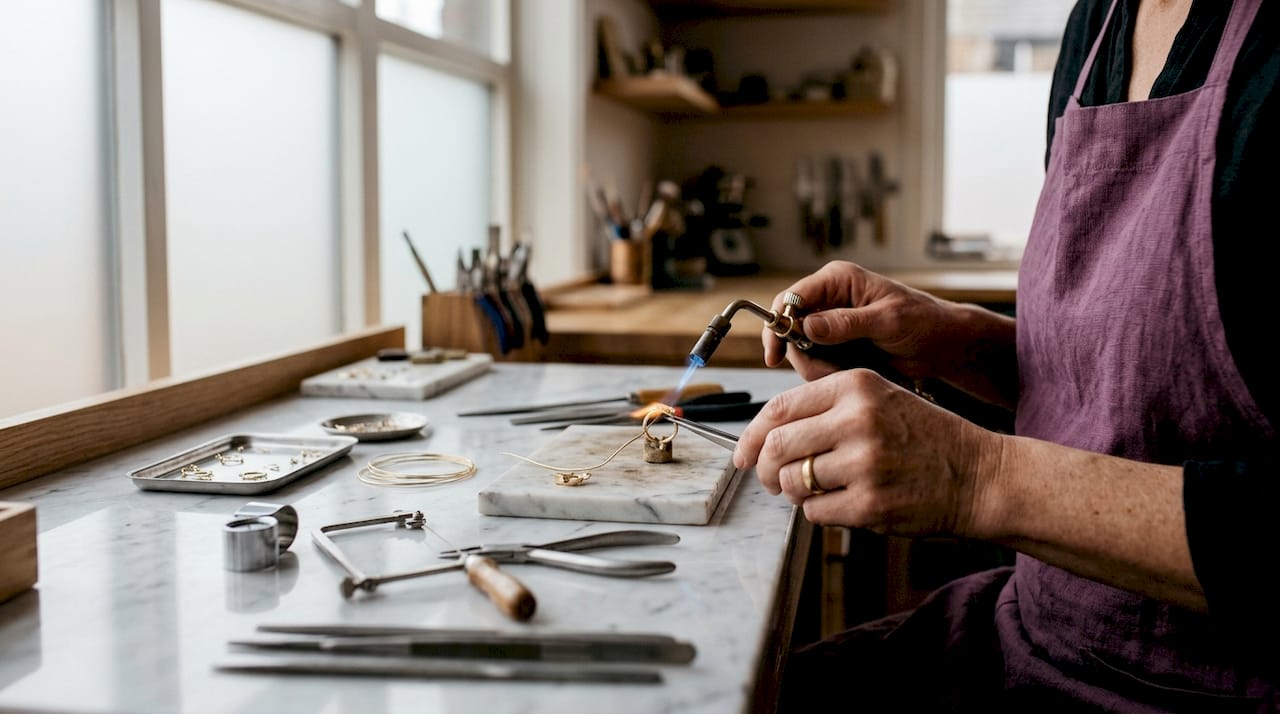
Gemstone quality follows a parallel standard. Certification from GIA, AGS, or IGI objectively confirms a stone’s authenticity and grade. Without one of these certificates, a seller’s description of a stone as “high quality” carries no verifiable weight. Always request the certificate, not just the claim.
Pro Tip: Ask specifically whether a piece uses solid metal or plated metal. “Gold-filled” and “gold-plated” are not the same as solid gold. Gold-filled contains a legally required minimum layer of gold bonded to a base metal, while plated pieces have a far thinner coating with no regulated minimum.
| Metal type | Purity standard | Durability |
|---|---|---|
| 18K solid gold | 75% pure gold | Excellent, lasts generations |
| 14K solid gold | 58.3% pure gold | Very good, ideal for daily wear |
| PT950 platinum | 95% pure platinum | Outstanding, hypoallergenic |
| 925 sterling silver | 92.5% pure silver | Good, requires regular care |
| Gold-plated base metal | Thin surface layer only | Low, degrades within months |
How does craftsmanship impact jewelry longevity?
Craftsmanship fundamentally determines jewelry longevity through design choices that reinforce metal thickness and stone security to withstand daily wear. Longevity is planned during design, not added afterward. An experienced artisan reinforces stress points before a piece ever reaches your hand.
Design engineering you cannot see
The most critical craftsmanship decisions happen where the piece is most likely to fail. Ring shanks thin out at the base from friction against surfaces. Pendant bails crack where the chain pulls. High-quality jewelry prioritizes thickness and metal distribution at these stress points, because hollow or thin constructions fail quickly despite their appearance. A piece that feels substantial in your hand is usually telling you something real about its construction.
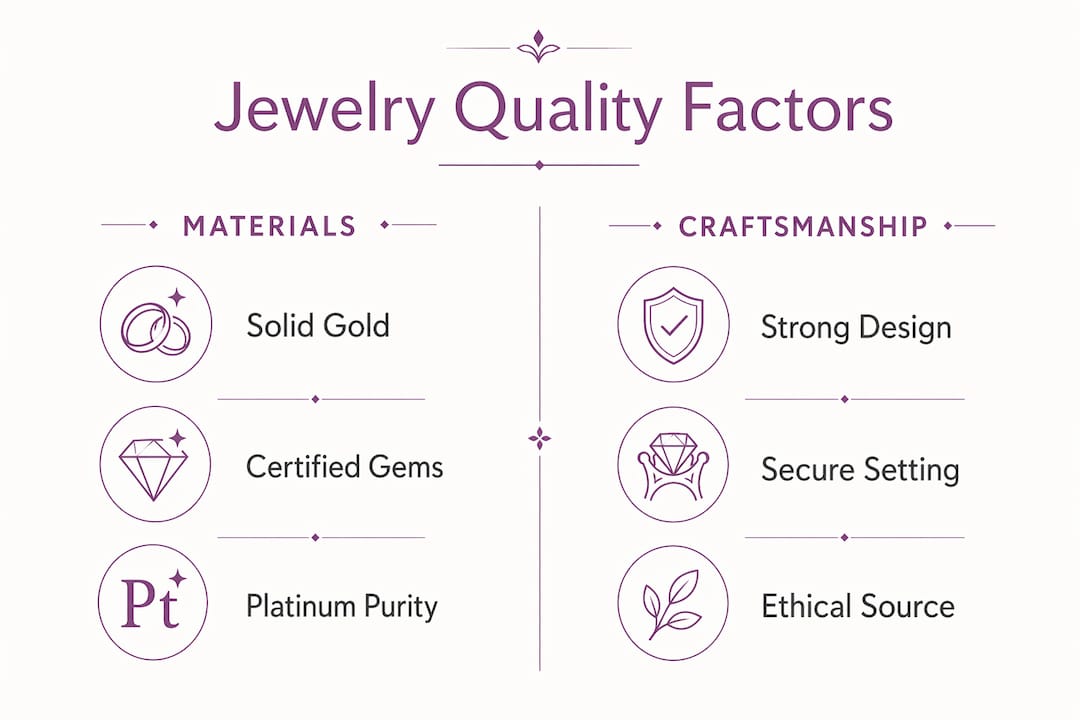
Fabrication methods and what they mean
Hand fabrication compresses metal and eliminates voids better than casting, producing more structurally sound pieces when skillfully executed. Casting is faster and cheaper, which is why mass-produced jewelry relies on it almost exclusively. Neither method is inherently wrong, but hand fabrication at key structural points produces measurably stronger results. Soldered joints in quality pieces are clean, minimal, and placed to reduce stress concentration.
Stone setting security
Bezel settings minimize gemstone loosening and are the most conservative choice for active wearers. Prong settings allow more light into a stone, which improves brilliance, but prong quality matters far more than prong quantity. Four well-set, properly angled prongs outperform six poorly executed ones. Precision hand-setting extends both the stone’s security and the overall life of the piece. You can check prong quality yourself by running a fingernail lightly across each prong tip. A sharp or uneven edge signals poor finishing.
What does high-quality jewelry craftsmanship mean in practice? It means finishing work on surfaces the wearer never sees. Genuinely handcrafted jewelry shows quality finishing even on surfaces not visible to the wearer, along with slight natural variations between pieces and transparent origin details. Mass-produced pieces typically show rough interiors, uniform machine marks, and no origin documentation. For a deeper look at what separates artisanal work from production-line pieces, the guide on artisan jewelry craftsmanship covers the specific techniques involved.
Pro Tip: Turn a ring upside down and examine the interior shank with a loupe or phone camera. A quality piece shows smooth, polished metal inside. A rough, pitted, or unfinished interior signals a manufacturer who cut corners where they thought no one would look.
Key craftsmanship signals to evaluate before buying:
- Weight feels proportional to size, not hollow or suspiciously light
- Prong tips are rounded and uniform, with no sharp edges
- Stone sits level and centered within its setting
- Solder joints are invisible or nearly invisible
- Interior surfaces are polished, not rough or pitted
- Slight natural variation exists between pieces if handcrafted
What ethical considerations contribute to jewelry quality?
Ethical sourcing is not a marketing add-on. It is a structural indicator of quality. Brands that polish all surfaces meticulously tend also to maintain rigorous transparency about their materials and supply chains. The correlation is consistent: a jeweler who cares about what you cannot see also cares about where their materials come from.
Ethical sourcing is often mirrored in meticulous internal finishing, indicating a jeweler’s commitment to quality throughout the entire production process. This is not coincidence. The same discipline that drives a craftsperson to finish an interior surface drives them to verify the origin of every stone and gram of metal they use.
Consumers can verify ethical standards through several concrete steps:
- Request documentation of metal and gemstone origin, not just verbal assurances
- Look for Fairmined or Fairtrade gold certification on the metal
- Confirm gemstone certificates from GIA, AGS, or IGI include origin data where available
- Ask whether the brand audits its supply chain or relies solely on supplier claims
- Check whether the brand publishes its sourcing practices publicly
Lab-grown gemstones, including moissanite and lab-grown diamonds, remove the most difficult part of this verification process entirely. Their origin is documented and controlled from creation. For buyers who prioritize sustainable jewelry choices, lab-grown stones offer both ethical clarity and measurable quality.
How do jewelry quality grades work?
Jewelry quality grading operates through two parallel systems: hallmarking for metals and gemological certificates for stones. Understanding both tells you most of what you need to know before buying.
Hallmarking legally certifies metal purity, maker identity, and assay date, giving buyers verifiable quality provenance. British hallmarking dates to 1300, making it one of the oldest consumer protection systems in existence. In the United States, the Federal Trade Commission requires accurate karat disclosure on gold jewelry. Look for stamps like “14K,” “18K,” “PT950,” or “925” on the piece itself. The absence of a stamp on a piece claiming to be solid gold is a significant red flag.
Gemstone grading reports from GIA, AGS, or IGI assess the four Cs: cut, color, clarity, and carat weight. Each factor affects both appearance and value. Cut quality has the greatest impact on a stone’s visual brilliance, which is why two stones with identical carat weights can look dramatically different in person.
Distinguishing fine, demi-fine, and fashion jewelry
What does fine jewelry mean versus demi-fine or fashion? The differences are material and structural, not just price-based.
| Category | Metal standard | Stone standard | Expected lifespan |
|---|---|---|---|
| Fine jewelry | Solid 14K/18K gold, platinum | Certified natural or lab-grown gems | Generations |
| Demi-fine jewelry | Gold vermeil, gold-filled, sterling silver | Semi-precious stones, some lab-grown | Several years with care |
| Fashion jewelry | Base metal, plated | Synthetic or glass stones | Months to 1–2 years |
What is demi-fine jewelry, exactly? It occupies the space between fashion and fine, using real precious metals in thinner layers or lower-purity alloys combined with genuine but less expensive stones. Demi-fine pieces offer real quality at accessible prices, but they require more care and have a shorter lifespan than solid fine jewelry. For buyers who want the look of fine jewelry at a lower entry point, affordable quality alternatives exist that use real materials without the fine jewelry price tag.
Well-crafted jewelry ages gracefully, with metals developing a natural patina and timeless designs remaining wearable beyond fashion cycles. That aging process is a feature, not a flaw, in genuinely quality pieces.
Key Takeaways
Jewelry quality is determined by material purity, structural craftsmanship, stone certification, and ethical sourcing working together, not by any single factor alone.
| Point | Details |
|---|---|
| Material purity is the baseline | Solid 14K/18K gold, PT950 platinum, and 925 sterling silver are the minimum standards for lasting quality. |
| Craftsmanship determines longevity | Reinforced stress points, clean solder joints, and secure stone settings define how long a piece survives daily wear. |
| Certification removes guesswork | GIA, AGS, or IGI certificates and metal hallmarks give you verifiable proof of quality, not just marketing claims. |
| Ethical sourcing signals quality discipline | Brands that document their supply chains consistently show the same rigor in their craftsmanship and finishing. |
| Category distinctions matter | Fine, demi-fine, and fashion jewelry differ in material standards and expected lifespan, not just price. |
Why I think most buyers are looking in the wrong place
Most people evaluate jewelry by looking at the stone. I understand why. The stone catches the light, draws the eye, and drives the emotional response that makes you want to buy. But the stone is almost never where quality fails first.
The shank cracks. The prong snaps. The clasp breaks. The solder joint separates. Every failure point I have seen in jewelry that “fell apart” traces back to construction decisions made before the stone was ever set. The stone itself is usually fine. The structure around it was not built to last.
The second mistake I see constantly is treating price as a proxy for quality. Price reflects many things: brand positioning, retail markup, marketing spend, and yes, sometimes materials. But a high price tag does not guarantee solid metal, secure settings, or ethical sourcing. A mid-priced piece from a transparent maker with documented materials and visible craftsmanship will outlast an expensive piece from a brand that cannot tell you where its gold came from.
My practical advice is simple. Pick up the piece. Feel its weight. Look inside the band. Ask for the hallmark and the gemstone certificate. If the seller cannot produce either, walk away. Quality leaves evidence. You just have to know where to look.
— Ammar
Merijaan’s approach to quality you can verify
Merijaan builds each piece around the quality standards covered here: solid materials, expert construction, and lab-grown moissanite that comes with documented ethical origins. Every profit goes directly back to the artisans who make the jewelry, which means the craftsmanship discipline runs through the entire operation, not just the marketing. Buyers who want fine jewelry quality without the opacity of traditional supply chains will find Merijaan’s lab-grown diamond collection worth a close look. The pieces are designed to wear daily, age gracefully, and hold up to the same scrutiny described in this article. For buyers focused on jewelry built for daily wear, Merijaan’s design approach addresses exactly those demands.
FAQ
What does jewelry quality mean in simple terms?
Jewelry quality means a piece is made from durable, pure materials like solid gold or platinum, constructed with expert craftsmanship, and sourced ethically. It is the combination of all three factors, not just one, that defines a quality piece.
How do I assess jewelry quality before buying?
Check for metal hallmarks like “14K” or “925,” request a GIA, AGS, or IGI certificate for any gemstone, and physically examine the piece for weight, smooth interior finishing, and secure stone settings.
Why does fashion jewelry differ from fine jewelry?
Fashion jewelry uses base metals and plated surfaces that degrade within months, while fine jewelry uses solid precious metals and certified gemstones designed to last generations. The difference is material and structural, not just cosmetic.
What is demi-fine jewelry and how long does it last?
Demi-fine jewelry uses real precious metals in thinner layers, such as gold vermeil or gold-filled, combined with genuine but less expensive stones. With proper care, demi-fine pieces typically last several years before showing significant wear.
Does ethical sourcing actually affect jewelry quality?
Ethical sourcing correlates directly with craftsmanship discipline. Jewelers who document their supply chains and verify material origins consistently apply the same rigor to their construction and finishing, producing measurably better pieces.

